Table of Contents
Introduction
Comrades
Drugs
Day 0 – Pre-Flight Jitters
Day 1 – Jo-Hell-No
Day 2 – Jozi and the Fraidy Cats
Day 3 – Driving Miss Sai
Day 4 – 50 Shades of Lion
Day 5 – The Blind Leading the Blyde
Day 6 – Sabi Sauce
Day 7 – Last Chance for Lions
Day 8 – Calm Before the Storm
Day 9 – COMRADES!
Day 10 – EsCape
Day 11 – Cape Crusaders
Day 12 – Robben Hood
Day 13 – FrankenWine
Day 14 – What’s the Point?
Day 15 / 16 – Totsiens
Conclusions
Random Thoughts
Some Pictures
Intro
For our next adventure, we decided to go to South Africa. And by we, I mean that I picked it, and Sai gamely went along. For some reason, she trusted me with the planning for this trip. That was her mistake, and likely the last time she would make that mistake again. Prepare yourself for a lengthy report of this two week vacation. You might learn something new, seeing as I learned a lot, but be warned, I have a tendency to take facts and screw them up.
I came to Africa to bag a big one. But unlike a rich Minnesotan dentist, I didn’t plan to butcher a beloved lion (my mother would roll over in her grave, and my Buddhist wife would karmically curse me in my next life, or give me hell in this one). Instead, my trophy would (hopefully) be a finishers medal from Comrades, the 56 mile +/- footrace featuring a field capped at 20,000 people, who I assume like me would rather hurt themselves than an innocent lion. The stated goal for this trip was to run the Comrades Marathon. However, that was just one part of the package. We planned to do as much as we could in our two weeks. Starting with a flight from DC on May 20th, we’d arrive in Johannesburg on May 21st, I’d run the race from Pietermaritzburg to Durban on May 29th, and we’d fly back from Cape Town on June 4th, arriving back in DC on June 5th, with in-between stops to safari, sight-see, wine and dine, and whatever else I could come up with, though Sai nixed my suggestion for her to go swimming with the sharks (chicken).
This is my running diary from our trip. But it’s not just about running. And hopefully it won’t have much about diarrhea, though my verbosity may be diagnosed as diarrhea of the pen (or printer). There will be a fair number of footnotes, and probably a note or two about my feet (may God have mercy on their soles). And plenty of bad puns. Enjoy or ignore.
Comrades
Comrades is the oldest and largest ultramarathon in the world. It runs through the Valley of a Thousand Hills, though the website didn’t warn me that there would be that many when I signed up for it last fall. It goes between Pietermaritzburg and Durban, alternating directions each year, with 2016 being a “down” run to the Durban destination. Of the 20,000 entrants, we’ll see how many actually start, and how many of us hopefully finish. It’s Vic Clapham’s fault, as he founded the race to commemorate fallen brothers in arms after the first World War, with the first running in 1921, continuing every year since except for a hiatus during World War II[1]. I figured 2016 was a good chance for me to try my hand and feet at it, since there’s a scary possibility that crazy Donald may soon come to power and inadvertently (or advertently?) start WWIII, impacting future runnings.
Drugs
To begin, we needed vaccinations for typhoid and malaria pills (we are both current on Hepatitis vaccinations, and we weren’t entering any yellow fever areas). I worried a bit about typhoid, as some symptoms include lethargy, poor appetite, headache, generalized aches and pains, fever, diarrhea, chest congestion and abdominal pain. Most of my ultramarathons have led to most of those symptoms, so how would I know if the vaccination worked? Likewise, malaria symptoms can include fever, chills, headache, sweats, fatigue, nausea and vomiting, dry cough, muscle or back pain (or both), and an enlarged spleen. Again, (except for the spleen part), these all sound like running induced ailments. So, by the end of this trip, I may be carrying typhoid and malaria, or I may just be a wimp from my run. Either way, you should probably keep your distance.
I didn’t think the typhoid shot or malaria pills were enough, so prior to the trip, I found a bunch of additional drugs to take. My chest cold and cough did not respond to the first course of antibiotics, so the doctor gave me cough medicine, stronger antibiotics, and steroids, so I could really be ready to run! Before you flag my race report with an asterisk, know this: cheaters never win (except for Lance, and he only won seven times), and I’ll spare you the suspense, I didn’t win, nor did I cheat, which doesn’t seem right either.
Now for more medical jargon than you’d ever care to know: Prednisone (my prescribed juice) is a glucocorticosteroid on the banned “in competition” list. This means that you cannot take it from 12 hours before the start through the end of the competition. According to the WADA (World Anti-Doping Agency), its appearance on the prohibited list is “more due to dangerous side effects than performance enhancing effects.” Large doses increase cardiac output, cause mood elevation, euphoria, and increased motor activity. Personally, I think this sounds great. I recommend Prednisone to everyone. It’s like ecstasy, but to treat bronchitis. Oh, those side effects: hyperglycemia, reduced bone density, adrenal insufficiency, weight gain, muscle breakdown and anovulation (menstrual irregularities). Since I was trying to get healthy enough to run 55+ miles, I wasn’t too worried about the weight gain, I knew I’d experience plenty of muscle breakdown anyway, and I leave the ovulating to Sai. The other side effects, well, I guess I’d have to roll the dice.
And there are always Therapeutic Use Exemptions (TUEs), but a little info on that front: The application should be filed at least 30 days before the event (and I hadn’t planned to get sick that far in advance). In exceptional cases, TUEs may be approved retroactively, but apparently if you are not very competitive, no one really cares what you take. So while I thought it might be cool to join the ranks of Salazar’s athletes, I’m not ranked, and WADA has better things to worry about.[2]
So my Prednisone prescription was scaled to run out by 5/25, with the run out of Pietermarizburg scheduled on 5/29. This meant that I would be without the benefit of a bigger heart and better mood on race morning, but I would be compliant with the official drug policies. Alternatively, what if I saved up and popped the magic pills like S-caps or Swedish fish during the run, attaining euphoria and racing like a Russian, just hoping that my heart doesn’t explode?![3]
Some eerie similarities to blow your mind (coincidence – you bet!) before this report really gets started. In 1922, Sir Arthur Newton[4] at the age of 39 ran his first Comrades. He managed to edge out 88 people. Arthur Newton has 12 letters. So does Ben Apfelbaum. Guess how old I am, heading into my first Comrades? Now if I can manage to beat 88 people, maybe I’ll end up a Comrades legend still regaled 94 years from now. Okay, Sir Arthur won his race, and while I trust I’ll beat the same number of competitors, I also expect several thousand to finish in front of me. Newton went on to win the race four more times, running considerably faster over a tougher course (predating paved roads, crowd support and aid stations). Another interesting fact – Newtie (I feel like I know him well enough now to call him that) ran his first race as a form of protest against some unfair taxes on his farm (or something)[5]; imagine if Teabaggers Tea Party people followed this same strategy – Paul Ryan might really run his 3 hour marathon![6]
Day 0 – Friday, May 20th – Pre-Flight Jitters
My recent track record of visiting foreign places during times of turmoil (Paris attacks of 2015; Thailand civil unrest of 2012; Israel-Hezbollah war in 2006) and sparse details on a plane crash the day before we left (ISIS / ISIL?), had me a little nervous boarding our Friday flight. I was hoping for a trouble-free trip, with no global dramas playing out around us. This way, Sai and I could just focus on our own spousal melodramas instead of wartime correspondence.
We flew from Dulles at 5:40 p.m. on Friday, landing in Dakar at 1 a.m. (still Eastern Time – I didn’t adjust to local yet). What country is Dakar in? Surely I’m not the only one that didn’t know it was the capital of Senegal. It’s the westernmost edge of the African mainland, and a refueling / re-cleaning point for South African Air to keep us on the plane for an extra hour and half on its “direct” flight to Johannesburg. Leg #2 would get us the rest of the way there, another eight hours later. During the flight, I endured a couple of coughing fits, which meant I was counting down eight days to race, and still not breathing well… It also meant I didn’t sleep well. But Sai didn’t sleep well first, so I couldn’t expect to get a good night’s rest without her sonorous snores, my very own yellow noise machine.
Day 1 – Saturday, May 21st – Jo Hell No!
Johannesburg, Jo’Burg, Jozi, or Just-Don’t-Go-burg. Everyone warned us to be wary because it’s a scary place. Even Fodor (my other main source for planning information) fills its sales pitch with daunting cautions, such as highlighting a beautiful new bridge before telling readers not to cross it or you’ll get mugged. Thrice I was told by people who’d been that we should get the hell out as quickly as possible. Sai’s co-worker, who is from South Africa, reiterated this advice.
So, if you’re reading this presently, either I made it back and typed up my report and Jozi is not that bad (I’m anticipating a cross between Baltimore and Baghdad), or my chicken-scratch scribbles have been preserved posthumously by the predator who took my life and travel journal, in which case, I won’t be recommending Jo-Crazy-For-Going-There-Burg to any of my friends, but I do at least somewhat appreciate the murdering thug’s respect for my writing. Either way, after that ridiculously long run-on sentence (don’t worry, that won’t be the worst), many of you are likely cursing Jo’Burg’s bogeyman for not terminating the effort before it affronted your eyes. Sorry for your suffering.
After over 16 hours of plane time, we arrived at O.R. Tambo International Airport in Johannesburg, where we were greeted by the Iron Maiden world tour jet on the adjacent tarmac! Who knew those guys were still touring, let alone coming or going through South Africa? Not that it mattered. I was never a fan, and surely Sai is not interested in seeing a cheesy 80s hair band that probably doesn’t have much hair left anyway. Now if it was the GNR tour, I might have started our first fight. Then again, Run To The Hills would be a hell of a theme song for Comrades…
We picked up our rental car, I nearly sideswiped quite a few cars on the highway, and before I struck another vehicle, something struck me: WTF am I doing driving on the wrong (right-hand) side of the car on the wrong (left) side of the road, with a wife screaming at me to get over into the correct lane, when said wife Sai learned to drive backwards herself in Bangkok? Let me just tell you now, if Sai had only done all the driving, so many of the fights that follow in this report may have been averted. But she’d rather just yell at me from the passenger seat, so it’s her fault that we fought every time we went anywhere on wheels.
We eventually made it to our gated hotel in Rosebank (a nice Jo’Burg suburb), where despite the waning stress from the scary drive across town, I felt safe enough to leave our locked car. We crossed the street to the closed Rosebank Mall (surprising that the shops close at six on a Saturday night, but I prefer window shopping to watching the woman go nuts inside the stores). Don’t worry, Sai should have time to shop before the end of the trip, assuming survival of Johannesburg. We grabbed a simple dinner and called it an early night. Besides the tough drive, the only other threat was a prolonged coughing fit before dinner. Seven days to get healthy…
Day 2 – Sunday, May 22nd – Jozi and the Fraidy Cats
Jo’Burg, for real this time. The airport to highway to the cushy suburb hardly qualifies. Today, we hopped a single stop on the GauTrain to Park Station where we boarded the hop-on, hop-off city tour bus to take us around without the risk of my driving. The GauTrain is spotless and efficient, though infrequent, with trains 30 minutes apart. The double-decker bus brought us through the heart of the city and gave a lot of information, some of which I’ll try to summarize for you now; just know I work from memory, so facts are fluid. Read Wikipedia, Fodor’s, or anything you can find for a more reliable source. But if you’re too lazy, you’ve been warned twice already. So, with caveats covered, here goes.
In 1886, a bunch of Aussies all named George co-discovered gold in this obscure, otherwise worthless location. George Harrison netted the claim, while the other Georges got the proverbial shaft (not the golden one). Mr. Harrison flipped the mining rights for 10 pounds and disappeared, never to be heard from again until he resurfaced as a mop-topped British guitarist 70 years later. Or maybe that last one was a different George Harrison; I guess there could be more than one. Regardless, people flocked to the region like flies to shit or like girls to gold jewelry, and the shanty towns progressed to a big city named Johannesburg, named after one of several Johannes, not sure which. Did you know that Jo’Burg is over a mile high? In your face, Denver. It’s the largest city in the world without any viable reason for being (no lakes, seas, rivers, or ports; water must be channeled in from hundreds of kilometers away). In other words, why would anyone settle here? Oh yeah, because girls (and gangstas) like their gold.
Surrounding the city, yellow hills are the repositories of old mines. They’ve started planting trees and grasses on these embankments, because the dust is toxic (and ugly). These same ugly yellow hills also used to demarcate separation of the city proper from its poorer suburbs during the apartheid era. Don’t worry, I’ll tell you more about that shortly. They are also currently re-mining these same mining dumps because modern technology has enabled them to squeeze a little more money out of the earth.
So where to now? How about Soweto! We had opted for the Soweto excursion extension tour option, so we hopped off at the Gold Reef Casino, grabbed a quick bite to eat, hit the jackpot at the slots which we planned to use to pay off our muggers, then hopped in a smaller van for the ride to the South West Townships with a personal guide named Spu (as opposed to the headphone recordings from the bus). Spu was short for two tougher names to pronounce, so he produced tougher names for each of us, with mysterious meanings to be given later in the tour.
Soweto was where the Africans were sent to clear out the slums in Johannesburg in 1910, under the thin guise of a public health concern after a plague outbreak. Whereas the poor white workers were allowed to remain in the city, the non-whites were forced out as part of the divide and rule program. According to our guide who has spent his entire life in Soweto, today it welcomes people of all ethnicities. However, during our (admittedly limited) two hour tour, the only white people we saw were our fellow tourists.
Soweto is a series of townships where during apartheid, different races and tribes were kept separated from each other. Many of the areas consisted of very small, single story sorry looking abodes with four bedrooms somehow crammed inside, but no indoor plumbing. On the side of the road, some people were selling plastic tubs which are too tiny for kiddie pools, but apparently they are big enough to act as bath tubs (you bathe sectionally, according to Spu). Between some of the houses, some lean-to sheds or corrugated metal pieces or plastic sheets were erected for additional income, in an early, unheralded version of Air B&B. Hostels, shanties, and tent cities also house immigrants too poor to afford a brick structure. Many are from Lesotho and other poorer African nations, where workers come to stay for a short time in these hovels, save up money, and go back to provide for their families.
We stopped at the Hector Pieterson Memorial and Museum, where we learned about the student uprising from 1976. On June 16th of that year, a bunch of understandably angry youths peacefully protested the inferior educations they were receiving at their racially segregated schools. In response, the local police pulled a Montgomery Burns and released the hounds, against which the students defended themselves, so the cops used lead, shooting dead dozens of kids, including 13 year old Hector Pieterson. This incident gained great notoriety and strengthened the resolve of those fighting against the racist regime, garnering greater support for the oppressed, and became a key turning point in the anti-apartheid movement, which would end with free elections just 18 years later (almost a Hector and a half of lifetimes longer).[7]
But Soweto wasn’t all depressing, just mostly. We passed a huge stadium, home playing grounds for the Kaizer Chiefs. Like Iron Maiden, I didn’t know they were still around, but I think I still have one of their CDs in a box in my basement. Good for them that they can fill a big arena like that today. The stadium was prominent in South Africa’s 2010 hosting of the World Cup, when vuvuzelas became the most annoying sound since Miley Cyrus (sorry, tried finding a more annoying singer from 2010, but she was the worst I found – please provide a better fill-in here if you can from that period). We saw the former homes of Nelson Mandela and Desmond Tutu just two blocks apart on the same street, though they never co-existed because Mandela spent those years at Robben Island. If you’re lucky, maybe I’ll tell you about Robben Island when we go to Cape Town (if you’re really curious or impatient, jump to Day 12). Soweto brags that this is the only street on the planet that had two Nobel Peace Prize winners. Last stop was Kliptown, where District 9 was filmed. This was what I expected all of Soweto to look like from the movie, and parts were true to that form, some places were even worse, but most were better. There was a nice new complex in Kliptown with the only 4 star hotel in Soweto, and a monument with carvings from South Africa’s 1955 Freedom Charter, many of which later became part of the Constitution (after free elections). Radical ideas from this Freedom Charter included Equal Rights, Wealth Distribution, Education for All, and Living Wages. Bernie Sanders would pop a boner.
So our new Soweto / Xhosa / Bantu (or whatever) names were Rolihlahla for me, and Nolufasso (sp?) for Sai. Mine was apparently a nickname given to Mandela as a child, meaning troublemaker. Not sure if being nicknamed after the great Madiba in this case was a compliment though. Sai’s name, while it sounded like he was going after her weight, meant something to the effect of one who keeps things simple. I think our buddy Spu clearly missed the marks on both counts, mine and my drama queen’s.
I thought from my limited research that Apartheid started in 1948 and ended in the early 90’s, thanks to the shame brought on the country by its negative portrayal in Lethal Weapon 2, just as Rocky double-handedly knocked out the USSR in 80’s, and Team America: World Police established Americans as the biggest dicks in the 00’s[8]. But now that I’ve toured the Apartheid Museum in Johannesburg, our next mood-killing stop (working against my Prednisone here guys), I know a lot more than before which I’ll proceed to bore you with now, assuming you’re still reading. Come on people, it’s only Day 2! Some SA history, as I understand it…
Native Africans lived like Bushmen, perfectly happy for thousands of years, following eons of evolution (sorry Creationists, not discrediting the bible, just relating “facts” from the phony “fossils” found in Africa). Peaceful Southern African living among the warring tribes was then interrupted when the damn Dutch decided to find warmer climes, followed by the bloody Brits. The European settlers displaced the locals, brought in their own slaves, raided the natural resources, warred with each other and the locals, and completely plagiarized American history (replacing Indians with Africans), except they never tried that whole melting pot concept that we have here in the US, and they weren’t as effective in wiping out the Natives (not enough smallpox blankets I guess).
In the early 1900s, the Europeans struck a brilliant compromise for their divided country: the white ruling minority would take a measly 92% of the land, while the majority population of Africans would get to share the full 8%! Everyone wins, right? It was practically a unanimously approved decision (easier since only white men had the right to vote). The percentages were adjusted a few points a few years later, but not much. Africans were not enslaved under this measure, they were just forced into subservience. There were also a lot of poor, angry white people, who loved to blame the non-whites (Africans and Indians, mostly) for taking their jobs (insert a South Park “took our jobs” meme here). Next, the opportunistic, elitist whites worked with the poor, angry, redneck racists to form the Nationalist Party in 1948. This twisted government enacted segregation on steroids (and not the good kind) to break families apart. There were dozens of laws implemented to restrict the rights and actions of the majority of South Africans, in a program designed to divide and rule (for fear of unified resistance). It forced non-whites to carry passbooks at all times to show where they were allowed to be and when; if found without a passbook, they’d be arrested[9].
South Africa imprisoned, tortured, murdered, massacred many opponents of its awful Apartheid program. Mandela (imprisoned), Biko (tortured, murdered), and little Hector (massacred) were but a few famous examples. Eventually, amidst worldwide pressure from the outside and enough resistance from within (and of course, Danny Glover’s deadpan delivery revoking the bad guy’s diplomatic immunity), the Apartheid era ended, Mandela went from prison to president, Matt Damon won some rugby matches, and everyone lived happily ever after![10]
One other gold nugget of Johannesburg knowledge – did you know that Gandhi lived here for many years? There’s a downtown Gandhi Square. The little Indian legend got his law degree in England before coming to South Africa to be inspired by his mistreatment as a colored person. A Rosa Parks-like train experience and further injustices motivated the Mahatma to dedicate his life to helping oppressed Indians, first in Johannesburg, before returning to his homeland. Hearing our recorded audio guide seemingly brag about the bullshit abuse of Gandhi as a hometown contributing claim to his fame, it reminded me of an old skit I saw a few years ago. I think it was “The Whitest Kids You Know” or maybe Tosh.O[11], where a guy is talking to a girl who is doing a report on Rosa Parks. He brags to her that his relative was the guy who told her to move to the back of the bus, and was therefore equally important in changing the world!
Day 3 – Monday, May 23rd – Driving Miss Sai
By now, you’ve probably figured out (if you’re paying attention) that I survived Jo-Not-So-Bad-Burg. I’ll miss Sai though. T.I.A. (This Is Africa); sacrifices have to be made. No, I didn’t abandon my beloved; the thought only crossed my mind every 10 minutes or so on the seven hour drive from Jo’Burg to the Kruger Gate, minus the 40 minutes for our enjoyable lunch along the way. So, 6 hours 20 minutes of driving, with Sai’s backseat driver critiques driving me crazier every 10 minutes or so (on average, she was not that consistent), equates to a long way of saying that I pondered peaceful life without the love of my life only 38 times along the way, give or take. If you’re wondering why she would be critiquing me from the backseat, it could be A) To assert her dominance, like Miss Daisy, or B) To be safely out of arm’s reach, or C) It’s just an expression, and Sai really preferred to sit right next to me, with her screams of “Watch out for that car / truck / bus / person / cow / goat!” piercing right into my unaccustomed left eardrum (it’s usually my right ear aurally assaulted, driving on the right (right) side of the road, with her to my right).
Yes, we both survived Johannesburg, and I’ll summarize by saying that it was not as bad as I had feared, but I don’t see a need to revisit, and would likely not be recommending it to others.
Once outside the City of Gold, highway driving wasn’t bad. My white knuckles loosened after the first hour, and the scenery shifted to an arid landscape for a while, broken up by stretches of farms. Twice, in the distance, nuclear reactors starkly stood out in the skyline. Did you know that parts of South Africa use nuclear power? I now knew something new and so do you (assuming you didn’t already). As we moved farther east, the scene picked up more and more green, more rolling hills, mountains, trees, etc. Good stuff. My job was not to crash, while Sai should have been taking moving pictures; instead, she chose to take pot-shots at me for passing too tightly, not switching lanes fast enough, driving too close to that other vehicle… In other words, take my thousands of words for it (since we lacked many pictures from this stretch), it was very nice. I will admit, there was one legitimate cause for alarm when I tried to squeeze past a slow-moving truck just as the passing lane suddenly ended, with oncoming traffic coming on quickly. Oh yeah, there was also the time I nearly made roadkill out of a flagman. But still, my mission (not to crash) was accomplished.
We checked into the Protea Hotel Kruger Gate at around 4 p.m. It’s a beautiful hotel just outside the Paul Kruger Gate into the Kruger National Park. Paul Kruger was a leader of the Boers fighting the Brits in the late 1800s, becoming President of South Africa, and namesake for a park, gate, park gate hotel, rand, and many other things I’m sure. Would you rather be leader of Boers, boars, or bores? We were greeted by a bunch of vervet monkeys climbing all over the entry canopy and trees. Check those little buggers off the list of wildlife! I almost feel guilty eating red vervet cupcakes after seeing their source, but I don’t think the species is endangered, so it’s okay. We could have stayed inside the park or at a private game reserve, but Sai trusted me, and I chose this place based on good reviews, great location, nice price, and an on-site fitness center that included a treadmill[12], which better get used to justify this selection (despite co-workers joking about it, I really didn’t want to go for an outdoor run and get hunted by a Big 5 game animal. We’ve already established that I am a pussy). We booked a full day safari for Tuesday, with the plan for me to take some pictures while Sai yells at another driver.
Day 4 – Tuesday, May 24th – 50 Shades of Lion
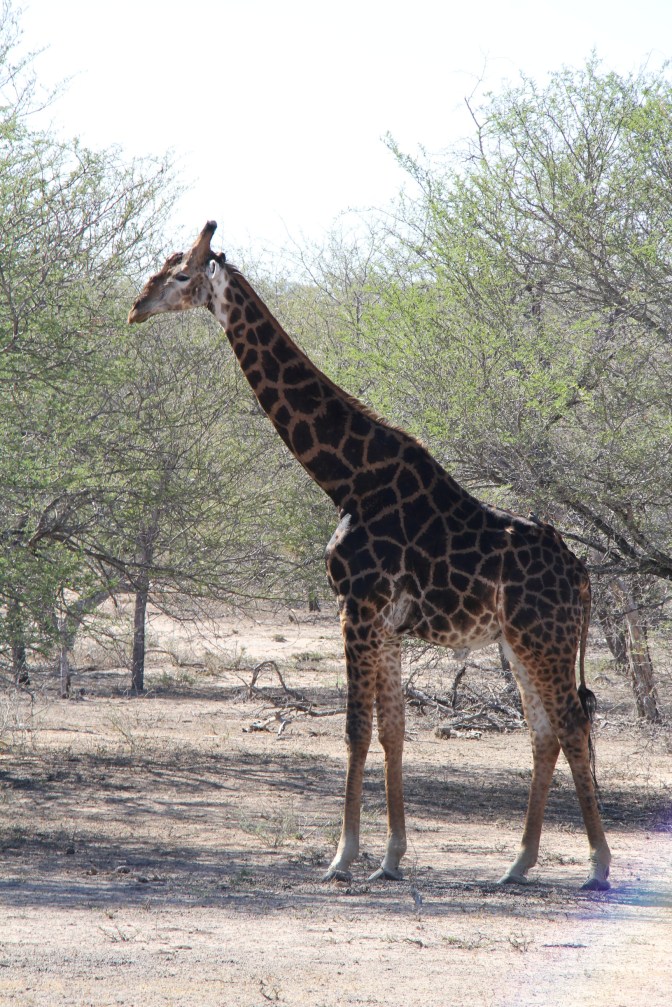
At 5:10 a.m. our synchronized alarms woke us, and by 6:10 we were at the Kruger Gate with our Echo Safari tour. After paying the international gate fee (280 Rand per person – ~$19 / each), we were on the lookout for the Big Five by Seven (that is, looking for the Big 5 Animals by 7 a.m., not looking for a big 5×7). For the uninitiated, the Big Five safari animals are Cape Buffalo, Elephant, Rhino, Leopard, and Lion. The moniker came from hunting days, but the term has a nice ring to it, so it stuck, and now that’s the list for everyone to check off whether a tour is successful or not. It’s a bit short-sighted, as there’s so much more to see, but you need to start somewhere. We started out with a giraffe, which isn’t on the list, so it didn’t count and our guide just sped past before we could take pictures of this worthless creature. Just kidding, though shortly afterward, I asked him to stop for some distant mammal. After reversing the vehicle, he said it was just an impala, and a distant one at that, so not worth any effort. Thanks Bud. Way to shoot me down in the first fifteen minutes. Our guide then pointed out a distant rhino. Okay, I admit, his was better than mine. Stupid impala. But I wasn’t done yet. We saw kudus and a crane, countless more impala everywhere, then another rhino, this time crossing the road right in front of us!
Can that be beat? You bet it can! Minutes later, we approached a line of cars aligning themselves to take close-up shots of two lions. The etiquette is to get in, take your pics, and then get out when more people come, so that they get a turn. However, our perfect timing gave us a wide window to watch the two wild cats, who were at this time not feeling so wild. Mr. Lion, whom we’ll call Jaime, sat behind Cersei (sorry, HBO GO would not let us watch the latest Game of Thrones in South Africa, so Sai and I had to improvise). Anyway, the two big, beautiful beasts just lounged with Jaime occasionally looking around at us, thinking “Have I had Thai lately? Or maybe that Indian woman would make a nice snack.” Meanwhile, we continued to snap pictures, expecting to be booted from our prime viewing area at any moment.
Can that be beat? Okay, but just once more. Don’t get greedy. Jaime started to lick Cersei (prudes, be warned, this gets a little graphic). Cersei started to perk up. Jaime licked some more. Cersei crawled a few feet into the street (setting up for the spotlight). Jaime climbed aboard, growled and nibbled, and went to town on her kitty, doggy-style. Maybe thirty seconds later, the big guy was done, and Cersei rolled onto her back and lit a cigarette. Jaime posed majestically for the cameras. I swear it’s true! Except for the smoking part (Cersei’s more of a drinker, not a smoker). I’ve got the whole thing on video, pervy voyeur that I am. Sai’s afraid that I might get fired for having kitty porn on my company phone. According to our guide, Cersei’s rollover afterwards is the lioness’ way of trying to help her lover’s load reach the egg. This wasn’t just sex for sex or for fun or for our personal show or recreational, this was purely procreational, as God intended (except for the whole Lannister incest taboo).
After the lion’s mighty showing (I wish my wife was that satisfied after less than a minute’s work), we ventured on to try to intrude on the personal moments of more large mammals without rooms. And before you ask (you greedy bastards), no, the fucking lions cannot be beat! (Words no one from Detroit has ever uttered).
We drove on, and I espied another giraffe. This time, my vision was not immediately dismissed, and we found a couple more long necks hanging behind the first one. Since they weren’t as close to our open air vehicle and didn’t seem to be setting up for a sex show anytime soon (no foreplay licking), we soon moved on. Wait, Elephant! I hollered out again from the back (there were only five of us plus our driver in the eleven seat safari vehicle; it’s not that I was shouting over a busload or anything. There were only ten other eyes, and Sai’s were probably focused on finding faults in the driver’s driving). Our guide backed up, and we were rewarded with my first African elephant, followed by his wife and two kids. And though they were a bit back off the road at first glance, while we waited, they wandered down and crossed right in front of us (always park at the elephant crossing sign. They’re very disciplined creatures).
Again, we drove on, and I was feeling emboldened. “Over there! Other side of the stream is a big animal!” I’m not a zoologist, how am I supposed to know what these random, foreign animals are? Hippo – whoever heard of such a thing? We backed up a bit and saw more large creatures taking a drink from this same stream (actually the Sabie River, but unusually low (winter, drought)). Our guide called these buffalo. That’s #4 for the score on Big Five (Rhino, Lion, Elephant, Buffalo – in case you don’t have them down yet), but before I could get photographic proof, we were off again, speeding up the road to investigate a closer big thing. Our fearless driver made a beeline for it, and we had a much closer view of our very own cape buffalo. He was pretty ugly, I thought. He looked pretty angry; perhaps they can read minds? I tried thinking less insulting thoughts about the big, ugly bastard (that’s bub for short – did you know that when someone calls you Bub, they’re really insulting you?). We took close-up pictures of our fourth Big Five species, and in less than 2 hours of looking! And that included humping lions! Who needs a leopard anyway?
We drove some more, because our determined guide was not as ready to just declare the whole trip a success as I was, and along the way, we saw another group of elephants (what’s the word for a herd of elephants? I believe it’s an RNC), another rhino, a really long snake slithering across the street right in front of us, a hyena, more giraffes, another lion right down the road from our fornicating friends (Lancel sat alone, looking judgmentally at the other two), some cool birds (don’t ask what kind), baboons, an inyala, and for good measure, how about a freaking leopard!
We followed a line of vehicles across a low, single lane bridge, when our go-to guide shouted out Leopard! The limber cat leapt onto the bridge in front of the car in front of us. We scrambled to our feet to hang out the open sides of our safari ride[13], hoping to steal an image of the stealthy carnivore, but it was quickly over to the other side and back down off the bridge. So close. Our driver was not done yet. He crossed the bridge, u-turned, and returned for an encore, which the well-trained leopard provided! Again, it was a short show, but still satisfying (like a laying lion). Five for Five. By the time we stopped for lunch, I was left wondering what we could possibly get out of the afternoon drive. Sai and I were the only ones in our group to elect to do the full day safari.
After we dropped our three along-riders, I asked our personal driver to deliver us some zebras, since I couldn’t think of another big Kruger creature. Half an hour later, we had our first zebra. You never forget your first. To prove it was no fluke, (though I can’t imagine anyone mistaking a zebra for a fluke[14]), ten minutes later, he found us three more!
He asked if I knew what a pumbaa is. A puma? I didn’t think the big, black cats were a possibility in this park, or the guidebook surely would have mentioned it[15]… “No, Pumbaa – do you know Lion King?” he asked, and pointed out a few scurrying little tusked pigs – oh, warthogs! Later, he would point out Zazu, a colorful, red-billed hornbill in a tree, rounding out the Lion King cast (even though Simba was grown and going by the name of Jaime now; the movie and play downplay Nala being his sister).
Our guide was more than just a great spotter and namer. He also answered lots of questions and told us tons of information without our asking. Some bits I’ve tried to retain:
- Rhinos are very endangered. Their only predator (once grown) are poachers. Despite the Park’s best efforts, on average a rhino is illegally butchered every day for its valuable horn, and otherwise left to rot on the spot.
- African wild dogs are even more endangered than rhinos. There are only approximately 120 left in the preserve. The alpha males and alpha females are not as (re)productive as other species, and unknown diseases are further thinning their population. We didn’t see any, but I am not complaining. We saw more than enough of everything else, and if I wanted to see some diseased, wild dogs, I could go back to Bangkok.
- The lion population is relatively stable at this time, though there have been scares when buffalo get an outbreak of tuberculosis and the big cats feast on the sick capers, contracting TB too, shrinking their numbers. Kruger National Park tries to balance letting nature run its course versus intervening to treat sick animals.
Had enough? Let me just say that the safari is truly an awesome experience. I could write thousands of words (I believe I just did), trying (and failing) to capture the wonder, but instead, I hope that you can share in the hundreds of pictures and handful of videos (some sexual in nature) to get a better appreciation for the experience. But know that seeing it firsthand, in the bush, is worth more than two in the hand… Not sure where I was going with that last one, but you know what I mean. We vowed never again, as any future safari expedition would surely pale in comparison.
Day 5 – Wednesday, May 25th – The Blind Leading the Blyde
To avoid the inevitable disappointment of a second safari after our first extraordinary foray, we decided to explore the Blyde River Canyon, the third largest canyon in the world. What are #1 and 2? Don’t ask me, Fodor only taught me #3. Good luck looking it up too, because when I tried, the different websites had canyons all over the map (some didn’t even mention Blyde). It depends on how you measure it (length, depth, width, accessibility, etc.). Regardless, Blyde is big and green and offers a scenic drive with several popular viewing points.
[Note to Readers – Skip the next two paragraphs to avoid a boring description of another Ben / Sai driving fight.]
To get there, I programmed GPSai with the simplest instructions: 1. Tell me when to turn. 2. Don’t tell me how to drive. Wanna guess how Nolufasso did with this assignment? 0 for 2. There was a basic map in the trusty guidebook that would get us to our target destination with minimal turns or surprises. Some say the journey is more fun than the endpoint; others say it’s more fun to enjoy a stress-free straight shot. Sai says we go wherever the GPS tells us to, since it was supposed to shave a few minutes off the aforementioned easy route. This shortcut took us through several random small towns and villages, well off the beaten highway path. There were countless cattle encounters and goat crossings galore. We were definitely taking the scenic route to our scenic route. We finally found a major road, and I was feeling more confident (less odd looks from villagers and livestock), when of course we went off course onto a smaller road, which then led to a smaller one still, then, as we were gazing ahead at the looming large mountains straight ahead, the pavement ended and we were headed north on a nice dirt road, which itself seemed to degrade further as we continued on the sure path as dictated by the two ladies telling me which way to go (Sai and Ms. Google Maps). The rocky road jostled the hell out of us as it took us past seemingly unmanned farmland (we saw animals, but few people or houses), testing the treads of our rental non-ATV. Sai assured me that we would arrive in a mere 20 km more on this off-road path; I explained how if the Honda Ballade ended in a ditch, I’d have a manageable time retracing our route on foot, but she’d be toast. A little later, we passed another group of cows walking down the middle of their secluded street, along with a rather surprised looking young cowherd (no relation to Colin, as far as I could tell), clearly wondering where the hell we were going, but I guess too chicken to ask. Soon, a positive sign appeared, when a large service vehicle caught up from behind. We let him pass, but he pulled over in front to ask us the same question that was on the coward’s mind. His laughter at our planned endpoint was not as positive a sign, and he pointed us back in the opposite direction. So much for the shortcut.
Thus began fight #2, with the first following Sai’s refusal to follow the second rule – DON’T TELL ME HOW TO DRIVE!! By now, I had adjusted to the South African style of aggressive driving. Slow-moving vehicle on a blind curve? No problem. Just jump across the centerline into oncoming traffic lanes, accelerate, and pass away! Well, you actually hold your breath (and your passenger holds their tongue), and you both hope not to literally pass away. That’s the way it’s done in SA. So when Sai wasn’t screaming at me, I was actually having fun. But after the dirt road debacle, I questioned her mapping skills when she planned a recovery that would take us an hour south, only to take another route back northwest to where we were trying to go. Fodor’s trusty map (the one she refused to follow in the first place) showed a simpler, northerly route around the big mountain. After fifteen minutes of arguing in the middle of a random parking lot about general map reading comprehension and common sense, she finally agreed to let me drive my way. Fun times.
The easterly, overly and through-mountain route turned out to be as scenic as the Panorama Route on the backside, which was our planned return road all along. We made it to the top of the canyon tour intact, and proceeded south from there back in the direction of our hotel. First stop was the Three Rondavels, mountain peaks across the gorge that resemble thatch huts, with a lovely river and dam far down below us on our high side. It’s a popular postcard view from the Mpumalanga Province. We next visited Bourke’s Luck Potholes, another neat roadside scenic attraction. It’s a series of cascading falls that’ve carved gullies (nicknamed potholes by some dork named Bourke) into the sides of the canyon cliffs. Between stops 2 and 3, we drove through a staged burn of dry grass (not the funny kind – we were only high in altitude) which was a little scary, seeing smoke and ash and not much else for a few short seconds until we were safely out the other side. At least I hope it was staged. Otherwise, we should have stopped to scold the group of pyromaniac stoners. God’s Window was our third stop, where we again enjoyed picturesque views of valleys below. Knowing where we were going was much less stressful, and we enjoyed the leisurely drive, jamming out to some SA tunes whenever FM signals allowed. The livestock crossings were far fewer, though there were regular monkey sightings instead. But monkeys are boring, so we headed back to Kruger for a quick buffet bite and then to look for bigger buggers in the black. Our vow to avoid disappointing follow up safaris lasted approximately 28 hours.
Filling our 20 seat vehicle were Sai, myself, and a guy from Brazil, plus our spotter / driver. Weekday, wintertime travels are the way to go, if you don’t like crowds. I don’t like crowds. Our driver had his headlights and a handheld spotlight shining out the right (wrong) side of the large open sided ride. A couple of empty seats back sat our Brazilian illuminati, with Sai and I seated opposite sharing the third spotlight to search for glowing eyes in the dark of the left side.
First complaint – the driver drove fast! By the time you think you might’ve spotted something, it was already well passed.
Second complaint (I like to complain) – the driver was deaf! Whenever one of us thought we saw something, it would take a group effort (and we were a small group) to gain the driver’s attention. By this time, our nocturnal target was even farther behind. Still, like a champ, our deaf speed racer would dutifully reverse course, shine his own light, and tell us it was just another group of stupid impalas (deja vu). Sorry Chevy, those things are dime a dozen in Kruger. For what it’s worth, they do make a nice sausage, which we enjoyed at dinner a few hours earlier. We also saw a couple kudu, which also make for nice sausage.
Third complaint – we sucked at night spotting. Not a single big cat was seen in our two hour tour. We did see a civet, a smaller predatory cat, and some hyenas were spotted, so that counts for something. Hyenas are nasty scavengers, not predators. They think they’re so smart, they’re always laughing at others. We also found three hippos, and a night owl elephant and giraffe (mostly courtesy of the show-off, multi-tasking driver; Sai and I were aces at spotting stupid impalas though).
Overall, it was an interesting change of scenery from the daytime viewing to glowing eyes in the dark. Though, as predicted, it could not measure up to the high bar set from our previous day’s success. If we’d seen a big cat in action, it would’ve been awesome. Instead, it was just okay. I guess it’s lions, leopards, or bust.
Day 6 – Thursday, May 26th – Sabi Sauce
By now, I’m sure you’ve had enough safari. People say it’s a once in a lifetime experience, and Sai and I had now gone on two tours (Tuesday’s all day extravaganza and Wednesday’s weak witnessing of the park after dark). So for Thursday, we elected to stay away from that Boer Kruger’s park and went to Sabi Sands instead. We were picked up at 5 a.m. (sleep’s overrated) and shuttled to the private game reserve roughly an hour away (though literally next door to our hotel – it’s a huge piece of land, with bumpy roads and several checkpoints to get there). For roughly double the price of Kruger for maybe half the time, you can tour a smaller animal enclosure. Having to wake up an hour earlier and adding in the commute, it sounds pretty awful, doesn’t it?
Well please disregard the short shrift (if you haven’t automatically), and consider the following: Sabi Sands is a large, densely animally populated property. Instead of national park serviced roads full of safari tour groups, private drivers, minivans, service vehicles, park police, etc., SS (Sabi Sands) has a handful of large all-terrain vehicles all going in different directions throughout the land on dirt tracks, such that you’d only occasionally see another group. And when an animal was spotted, we didn’t have to edge up or back on the main road, hoping it might come our way or hit a clearance so we could get a better view; here the driver would simply off-road it right to them! (In the lowveld, the bush is not as thick as in other regions, particularly in the dry, winter season. This makes it easier to drive through if you have the right ATV). While we were very fortunate to have some front row seats for Big Five (and other) animal sightings inside Kruger, inside SS, this is more of the norm. It is a much more intimate experience in general.
Our guide this time was likewise very knowledgeable, though this guy was much more eager to explain. We received random nuggets in whispered tones from our first guide. The SS guy (that sounds bad); Sabi Guy was like an information geyser, spewing more than I wanted to know. Easy, bub, let me just enjoy the rhino fifteen feet away, listening to him chew, rather than you telling me what he’s doing or telling me about the scabs on his neck on which those little birds are chewing… It was information overload, especially since I only retain a few snippets before I butcher the facts. Still, he was well intentioned, as am I as I try to share some stuff I found interesting without leading you too far astray (whatever’s wrong in the following is from my own misunderstanding – do not doubt Mr. Know-It-All Sabi Sands Guide).
White rhinos are rare and endangered, though not as rare as black rhinos. All of the rhinos we had seen so far were “white”, though I could not have guessed it without the guides calling them that. Turns out, I’m not as color-blind as this might have led me to believe. White rhinos are so named because of a bad translation of the word for wide, which was in reference to the shape of their mouths (you thought I was going to call out their wide asses, didn’t you? Fat rhino shamer, shame on you). Instead of fixing the translation, the name just stuck, relegating their skinnier-mouthed cousins to the spectral opposite colored name, to separate the species (some rhino-shit apartheid politics, if you ask me). There are several tell-tale signs between the two species, but most are too subtle for an idiot like me, so the easiest one to remember is that black rhinos are antagonistic, anti-social loners (like me!) who would rather charge you than pose for your picture.[16] Black rhinos also prefer thicker bush, and are less less rare (slightly more common, though you can’t call an endangered species common) in those areas. Luckily for us, we had the safer white rhinos in rare abundance on this day. Horny bastards with erectile dysfunction, missing values, and disposable income have created a market for rhino horns, under the mistaken belief that the magical points will somehow help the dicks of these dicks. Rhino horns are made of keratin. This is the same material as fingernails and hair. Mr. Sabi Tour Guide Know It All told us we’d be just as hard chewing our own fingernails as paying for magic rhino horn powder[17]. In other words, unless you’re a male rhino, you should never have a rhino boner.
We saw a single rhino chilling for our viewing pleasure, then another single, then a pair of lady rhinos a short while after that. Next, a group of four, then two more, and by then, we simply passed them by as if they were impalas. Can you imagine getting to the point where you’re like “What’s that? Oh, it’s just another rhino. Nothing to see here.”
We also saw wildebeests and warthogs and a waterbuck (missing whales and walri (what’s the plural of walrus?) to wrap up W animals I can think of offhand), some eagles (like the Doug Pederson era in Philly, hard to get overly excited about), mini-mongeese (what’s the plural of mongoose?), a giraffe, a hyena, kudu, endless worthless impalas, and a dazzling array of zebras. Here’s another fun fact from me[18]. Zebras tend to stand out because of their black and white stripes (relax, that’s not the fun fact. It’s a boring, obvious fact, I’m getting to the good stuff). As a defense mechanism, zebras in herds will run around in circles with their collective black and white stripes swirling together to confuse their hungry predators, so that a single animal is hard to isolate and stalk from the group. Thus a dazzle of zebras! In the one pack we saw, there are around two dozen of the referees, so I couldn’t pick out which one to eat.
Instead, they fed us a nice breakfast at one of the Sabi Sands Resorts before shuttling us back to our hotel. It is an option to consider staying at one of these high-end resorts, where the high-priced nightly fee includes twice daily game drives like the one we went on, but our Protea Hotel offered us more flexibility (plus a shitty treadmill). On the ride back, we saw a cape buffalo and a couple of elephants, bringing our Big Five tracking up to 60% for those keeping score (which everyone does). Another big cat-less bonanza. Fuck those stupid lions and lazy leopards who refused to grace us with their presence. I was willing to sacrifice the Canadian couple from our group to feed the ferocious felines, but apparently SA animals find Canucks to be tasteless and boring too[19].
After seeming less than excited about safaris ahead of the trip, and then seeming fully sated from the first full day, Sai surprised me[20] by getting the big game bug and pushing for another tour after Sabi. The girl was hooked!
Another look for the Big Two took us back to Kruger, this time in our own rental car. After three official tries, we felt expert enough to do it ourselves without guides. We filled the afternoon with five plus hours of slow driving through the park, before forlornly returning to the hotel, once again defeated. Okay, that’s a bit strong. For the day, we had experienced a bumper crop of rhinos plus the dazzle of zebras at Sabi, followed by Kruger’s offering of enough packs of tusked pachyderms to fill a brokered convention. I haven’t seen that many elephants since _____ (insert your own fat joke here. Sometimes the setup is too easy, just like your _____ (insert your own slutty family member here)). We saw so many elephants, twice in packs of ten or more (I didn’t take my shoes off to get an exact count), that the long-trunked troops took over where the earlier rhinos left off, meaning that they became passe, like those good for nothing except for sausage impalas.
We even saw a bunch of hippos, including three of them playing hide and seek in a big lake / pond (not sure its official designation – but it was a large body of water with three blobs bobbing just below the surface, with fat heads and backs poking above). Most of the hippos we saw were distant and hard to focus on, but that’s okay, I like to keep my distance from most hipsters anyway. There was a small croc sunning itself on a rock, blending well but given away by the other vehicles stopping to snap pics (a telltale sign of some kind of animal that would otherwise likely be missed). A box turtle got in on the action by taking his time crossing the street, stalling traffic in the process. More kudus and inyalas and Sai found us our own giraffe, until we were pursued by others pulling behind to see what we were seeing.
But the best was towards the last with a group of Cape buffalo. My expert wife (even if she couldn’t spew animal facts) spotted an ugly animal off in the distance. We lacked the all-terrain tires[21] from Sabi’s safari, so we simply waited to see if the big ugly would come our way. Should we stay or should we go, we pondered, like the Clash song, as other vehicles pulled up behind, saw the distant buffalo, and moved along, but our patience was rewarded when three rather large, unhappy-looking, angry-mooing animals gave us a walk-by. Their passing glances seemed to convey a clear message that said “Fuck you Ben. You’ve been calling us ugly for days now. We could easily turn and charge and your ass would be grass. That pathetic little Honda couldn’t stop us. But we’re the bigger, better beasts here, and you’re beneath us. Despite all your hurtful remarks, we won’t hurt you back. Know this, bruh, in a few short days, you’ll be gasping for air and wishing for mercy on the road toward Durban. We’ll be right here, basking in our glorious bushveld, and laughing like hyenas at your ugly, out-of-shape, sarcastic, sorry ass. Izokuthoba, Comrade.”
And with that, they were gone. Damn those magnificent mind-readers! They’ve moved up on my Big Five list, above those lame cats that I don’t think even exist. Leopards must be like leprechauns, only seen by drunken Irish (is there any other kind?). And lions only show up in some twisted bestiality dreams of mine. But the Cape buffalo, those boys are real. I ended that evening crawled up in a fetal position crying, but that’s not unusual. For her part, Sai snored away.
Day 7 – Friday, May 27th – Last Chance for Lions
[Another entry worth skipping. More Ben and Sai bickering. Like the old Aussie Georges once said (I imagine) “Sometimes you get gold. More often, you get shafted.” Today was the latter.]
Why does Nolufasso (the simplifier) always have to make it so complicated? The Skukuza gas station was around thirty minutes away. The Skukuza airport and rental car drop-off was ten minutes beyond that. All we had to do was drive around Kruger for a couple of hours, not see any mythical lions[22], fill up gas, and head for our flight to Durban. Simple enough, Nolufasso? Not so fast. First, Sai insisted that we didn’t need to fill the tank before returning the car (despite the fact that the rental agency specifically instructed us that we’d be charged extra if we didn’t), so I protested but relented because Sai is stubborn and I knew the argument would go on until we missed our flight if I didn’t just give in. I’d rather search for invisible leopards than continue to rationalize with an irrational wife. Then, as we were approaching the airport, she asked if we should get gas first. I ignored her. After unloading everything and checking in and dropping the Honda key, Sai comes back to tell me that we need petrol. I was a little miffed. And by miffed, I mean f-ing pissed, though I dutifully took the key back, said “I’ll be back” (not in an Ahnold accent), and dutifully left to fill in the tank while she waited at the airport. I even waited until I was a minute down the road with the windows up and well out of her earshot before I unleashed the fury of profanities.
After gassing up, I drove back to the airport, espying along the way my last large group of impalas milling around in the road, a soaring, circling large bird (if only I had a tour guide with me, I could tell you what kind, but it was big, black and white, and cool looking), and then a bunch of bloated-ass baboons. Seeing these wild animals tamed me, and I was feeling much more mellow when I made it back to the airport. I didn’t even care if Sai apologized for being wrong and wasting my time; I was feeling that magnanimous. All I needed was for her not to give me attitude for leaving her helplessly alone in a beautiful airport lounge that resembled the lobby of an African resort. Guess what happened next?
Sai was pissed that I didn’t tell her where I was going. I still think it was rather obvious when she said we needed gas, I said I’d be back, where the $%^@ do you think I was going? She was pissed that I left her with the carry-on luggage, rather than lugging it back to the car, because apparently it is impossible to use the bathroom if you have to watch a few bags. Camouflage predators were secretly lurking throughout that lounge, waiting to pounce if she dared try to pee without me. She was pissed that I didn’t take her with me. So, I was even more pissed that she was pissed at me, and that she was so pissy with me, so we spent half our time waiting for our flight exchanging nasty-grams in front of golden girl tourists who were wondering what type of wild animals had followed them into the terminal to stage a scene for their viewing displeasure. Good times.
In retrospect, it is likely that I was feeling the mounting stress of the impending race[23], shortening my usually lengthy fuse. I admitted as much to her, which she insisted I document, so there it is. You know you can’t spell Saint without Sai, said no one ever before now.
We bounced back through Jo’Burg before boarding the second leg to Durban on two of the smoothest flights I’ve ever been on. Their airport security was efficient, boarding and take-off were on-time, and both planes landed early. Despite being short flights, we were served snacks and drinks, and there were no BS extra charges like most stateside flights.
Of course our rollercoaster day hit another downslide when Sai’s psycho side reappeared on the ride to the hotel, and then again from the hotel to dinner, before she settled after drinking some wine. I tried to think of the best way to keep her liquored up for the balance of the trip.
Day 8 – Saturday, May 28th – Calm Before the Storm
Not sure that calm is the right word for it, more like resigned to my fate at this point. My measly mile morning run (cut short for need of a toilet, not by need to taper) told me three things. 1) Durban has a beautiful downtown stadium and Indian Ocean coastline that I didn’t see driving in the dark the night before. 2) Durban has a lot of big hills! And 3) Hopefully with better luck finding bathrooms along the way, I’d only need to repeat this slow, less than pleasant effort ~55 more times the next day.
At breakfast, Sai and I spoke with a nice French woman working for the UN in Tanzania. According to Elle (not her real name, but I couldn’t pronounce or spell her real name, so Elle it is), living in Tanzania, there’s not much to do but to take up running, at least in her case. We agreed to try to coordinate the ride to the start. She told us that the last bus to Pietermaritzburg would be leaving at 3:30 a.m.
During the twenty minute drive from the hotel to the race expo, Sai decided that she wanted no part of Durban driving, and would not be following this same route to drop Elle and me off for our bus eighteen hours later. Durban’s a big city (third largest in SA, behind Jozi and Cape Town), and driving in a foreign city is a little scary, but I was pretty sure Sai would have survived. Besides, she had nothing better to do at 3 a.m. Oh well, minor details, with plenty of time to figure out how I would get to the start. We reached the race expo, and it was a spectacular spectacle (if you like those sorts of things like I do). Next to the Boston Marathon, Comrades had probably the next best pre-race exposition of any race I’ve been to. Tons of booths showcasing all kinds of gear, gadgets, goods and goos, regional race registrations, food stalls, plus everything Comrades-labeled you can think of at their main sponsor New Balance store. After I picked up my race bibs, pins, timing chip, tee shirt, visor, and Comrades bag, we wandered around, picking up a couple of Comrades shirts, and Sai tried some shock treatment[24]. I bought a one-way bus ticket to a faraway town, and we exited the convention center in under an hour. I could have easily spent much more time (and money) there, but it’s not for everyone, and I’d get enough Comrades stuff the next day, in a long road trek.
Next, we drove up to Pietermaritzburg so I could get the lay of the land. It would be dark when I’d see it again pre-dawn the next day, so I figured we’d get it in all its daylight glory today. And it was glorious. Okay, maybe glorious is a bit strong (by an exponential factor), but it was amply okay (a hell of a lot nicer than Jo’Burg). We saw the City Hall that would start it all, with plenty of runners in town to pick up their numbers and to enjoy a couple hours of extra sleep versus those of us coming from Durban in the morning. (You can stay in Durban, but then have to make your way to Pietermaritzburg for the start, or you can stay in Pietermaritzburg, but then have to make your way back after the finish; Durban is bigger and had more to offer for Sai, so I opted to stay there). We popped into a local museum where displayed animals were a lot less exciting than the living creatures in the wild (though much easier to spot), and hit up Nando’s for some tasty peri peri chicken for lunch. According to the fast food restaurant’s history, the peri peri sauces are the only positives from the original Portuguese visitors.
My biggest takeaway was that it didn’t seem too far or even particularly hilly on the main highway drive out. Sure, the real course would follow a more serpentine route, (which should also promise better scenery and fewer vehicles), with an extra hill or two, but the direct drive gave me a little more confidence that I could make it from Point B to A.
On the return journey, my Thai navigator navigated like a Portuguese pro, taking us onto the back roads that traversed the Valley of a Thousand Hills, and followed a good portion of the course. And damn it all, it took a hell of a lot longer and revealed so many hills otherwise hidden from the highway! My confidence from just a paragraph ago quickly evaporated. Still, the quiet drive was a nice way of scoping out what I thought could be my final resting place. If I dropped dead there, those background hills would make a nice backdrop for my broken body. It was very scenic, winding its way through little towns with vistas of rolling hills all around. We stopped at a quaint little bohemian village selling handmade specialties. We stopped at the Comrades Wall of Honour (their spelling), where I picked out some legends I knew about from my pre-race studies[25] and from generally following the sport (Arthur Newton, Bill Rowan, Wally Hayward, Alberto Salazar, Ann Trason, to name just a few). I won’t be joining their ranks in this lifetime, but next time, who knows? Maybe I’ll be born with more talent and a better work ethic. Doubtful, I’ll more likely come back as a cockroach (if you believe in Karma), or be too busy burning (if you buy into those hellish doctrines), so this passing visit to the Wall of Honour was probably the closest I’ll ever get.
Enough depressing thoughts about running and mortality and eternal damnation, so we went to the beach. Nice beaches, though nothing to compare to the beauty of the Thai islands (I’ve been spoiled). Pasta dinner and early back to the B&B, where our very helpful host Vincent assured me that he’d already figured out race transportation for me (and Elle) from the hotel. We would meet at 2:45 in the lobby. Sai could sleep in. Despite the nerves that had me feeling nauseated most of the day, with the looming doom and gloom of a long, painful run hanging over my head, I somehow managed to get a little sleep that night.
Day 9 – Sunday, May 29th – COMRADES!!
Izokuthoba – It will humble you. This was the message for the 91st Comrades Marathon. Well consider me humbled. And hobbled. And happy! Sure, that took a lot longer than I thought it would, but a week ago, I was worried that I wouldn’t make it to the start of the 2016 race, let alone to the finish of the 2.1 marathon long “marathon”. The official measurement relayed to us at the start of this down run was 89.2 km, or 55.4 miles for the metrically challenged.
The down run covers the original route from 1921, going from Pietermaritzburg down to Durban. Next year will be an up run, generally reversing the course, except it starts at City Hall of the first city and ends in a stadium at the destination, such that the routes are a little different (the up run is usually about a mile shorter, those slackers). To the South African purists[26], only partial credit is given for completing one of the runs; you need both an up and a down (in either order) to have truly experienced the full fury of Comrades. But why stop there, when you can run it over and over and over… Vic Boston completed his 40th consecutive race on the day that I completed my first. The old man breezed past me sometime after 80 km, adding another humbling moment to a day full of them. I was five months old when Vic ran his first Comrades in 1977. Mr. Boston was just one (extremely impressive) example, and not even the longest running. South Africans revere this race, to the point where 95% of the 20,000 entrants are domestic, and roughly 2/3rds of all runners are repeaters.
Comrades is the oldest and largest ultramarathon in the world. It is South Africa’s equivalent premier running event to the US’ Boston Marathon. Having now done both[27], I feel qualified enough to offer some comparisons. If you’ve likewise done both, feel free to skip past the next several paragraphs, as you’ve likely come to your own conclusions. Or, if you read and disagree, you’re welcome to write your own report or publish a paper entitled “Ben is an Idiot,” but that won’t surprise many people. For those who have only done one or the other or neither, feel free to trust me, but as always, caveat emptor (Latin loosely for “Ben is an idiot”).
Both B and C (need to find a big A race to fill the ABCs of running) are old runs. Boston dates back to 1897, Comrades to 1921. Both are point to point, passing through a bunch of different towns along the way. Both started meagerly, with the first Boston consisting of 10 finishers, while Comrades managed 16. Neither allowed women to officially run until much later, Boston in 1972, Comrades in 1975[28]. Both have since grown to preeminent bucket list races for many people, with entry requirements and capped fields limited only by the logistical demands of the streets and organizers (in other words, if there were no caps, the fields would continue to grow). Both have large prize purses and attract the world’s best elite runners at the front. But those are the boring facts. These are not what make the runs special.
Boston is traditionally run on Patriots Day, a Monday in April when most offices are closed for their local fake holiday. This means that people can stay home and hang out, and spend hours on their curbs eating and drinking, and pointing and laughing at the pained expressions on the masochistic men and women running (or wheeling) past. Of course, no one admits this. They cover it up with enthusiastic “looking great” cheers of encouragement, but that’s a lie. I have photographic proof from every race I’ve ever done that I am never “looking great”. Comrades has changed its date over the years, but is now on a Sunday in late May, and features the same fanfare as Boston along the route. While driving the course on Saturday, we heard the race director predicting a crowd of 400,000 to be lining the way, (plus another 5 million people watching on TV). It’s these people who make these races so much “fun”.
The carnival atmosphere and supportive crowds (even if they are secretly laughing at us) are what really set these races apart from any others in my humble opinion. And since I’ve been humbled, I can offer that opinion freely. It is an addictive rush to run past the screaming hordes, like you’re part of something big. It’s a synergistic effect, runners, crowd and race all combining into an “event”. In both cases, people gear their year towards it. You don’t just jump in either. You plan for, register early, train, qualify, train some more (not necessarily in that order), and hope to be handed a metal medal to reward your mettle at the end of it. You can also pick up your trophy race clothes (tees, hats, long sleeves, jackets, etc.) to show others that you were part of it (though I didn’t buy too much at the expo, since I was afraid I’d have to give away the goods if I didn’t finish. Also, I’m cheap.).
The runners are so different in so many ways, but the similarities are striking. You see Boston Marathoners who run the race religiously, year after year, just like the Comrades veterans who keep returning and reuniting with previous pals on the long trek between towns. In both events, unless you’re in the top tier, you can see a sea of bodies stretching out in front and behind for miles, showing how many others are going through the same thing.
My first Boston (back in ’97) was one of the coolest running experiences of my life. Comrades may not have matched it, mainly because I was not feeling as strong as I was in that Boston run, but it was pretty darn cool too. (I’d rank Comrades above my ’03 and ’14 Bostons). Some differences though, to prevent any Boston vets from feeling like there’s no need to travel to South Africa, or vice versa, because there are some big separators between the two runs, not just an extra 29 miles in SA (though that is probably the scariest factor).
People swear by ultramarathons as being such a tighter knit community, where a low-key crowd is pulling together and pulling for each other, as opposed to a cutthroat road competition. There is usually some merit to this stereotype, as most ultras are more laidback, with almost always less than a 1000 runners (JFK being the closest I’ve run to that count, most are closer to 100), whereas most of the road races I typically run have ten or twenty times that count. When you’re running for half a day or more, there’s no rush to get in and out of aid stations, and the pace is more conversational. You’re seeing many of the same people over and over again, as you yo-yo back and forth, or pass back on the out and back sections, or loop around to catch each other. You often recognize familiar faces from previous races as well, as there are only so many ultra nuts in a given region. In the bigger races, there is much more anonymity, and I wouldn’t say animosity, but rather indifference to those around you. So for Comrades to combine the ultra distance with the big road race size, I wasn’t sure how it would play out, whether it would be the community experience or the road rage competition. I needn’t have worried, as the field epitomized the camaraderie of the race name. Many times when I felt defeated, random strangers would offer support, telling me to come along and run with them, or asking what was ailing me and suggesting this or that to help alleviate the suffering. In other big races, it’s not uncommon to offer a quick “hang in there” or “almost there” or other simple pick me up, but Comrades makes it more personal, via their brilliant bib system.
If there’s one thing I’d like Boston to plagiarize from Comrades (reversing the course and ending in Hopkinton not being a good idea), it would be the race bibs. The CMA[29] gives runners two bibs, one for front and the other for your back. These bibs tell your whole story, more or less. While it might mean something to hear someone shout out “Go Number 19647!”, having them instead say “Good job Ben, welcome to South Africa, how are you enjoying your first Comrades?” is a bit more personal. I won’t cover the entire bib system because it’s too complicated for me, but some basics are as follows: Foreign runners wear blue bibs, while locals wear white. If you’ve run ten or more (or won three times) you get a green bib, regardless of where you’re from. If you’ve run nine (or nineteen, or twenty nine, etc.) and are going for a milestone #10, 20, 30 or 40, you wear a yellow bib, so people around you instantly recognize the accomplishment you’re after. If you’re going for your second straight (a back to back), your bib is outlined accordingly. So, you can tell a lot about a runner just from the color of their bib. The tag also gives your first name prominently, and lists the number of completed runs as well. From this, my blue bib with the number 0 and my name told the people around me that I was a long way from home without a clue as to what I was doing. It is a great conversation starter! During the run, a very friendly complete stranger saw me struggling, and said “Come on Ben. You can do this!” I immediately spotted his yellow bib, and asked which milestone he was running for, #10 or 20? He said “let me surprise you” and pointed out the number 29, telling me that he was on his way to his 30th completion. I shook his hand, congratulated him on being a young-looking badass, and proceeded to eat his dust. Likewise, as we approached the stadium, I was celebrating with the zeroes around me by shouting “come on _____ (names unimportant), let’s go collect our first medals!” It’s such a simple system, but it says so much about the runners. BAA[30], if you’re reading this, steal Comrades’ bib system!
Anyway, enough preamble, history, preaching, ado; I’ll get on with my specific humbling experience[31]. The day started with a 2:15 a.m. alarm, and I was quickly up and showered and dressed, then busily dowsing myself in sunscreen in the hotel lobby while waiting for my ride to downtown Durban, where I’d hop on a bus to Pietermaritzburg, where I’d hop off that bus and try to return to Durban on foot, where I’d hopefully find my wife waiting in the Kingsmead Cricket Stadium, from which we’d figure out how to get back to the hotel so I could shower again and get back into bed. Sounds kind of pointless, to wake up so early to go so far out of the way just to circle back to the same initial prone position, but the same can be said for getting out of bed every day.
Our international carload of one American (me), one French woman living in Tanzania (Elle), and two South Africans (Sam and her mother, our driver) drove to Pietermaritzburg (sorry, that joke-sounding intro deserves a better punchline), which was a pleasant surprise to Elle and me, as we thought we were only being dropped off in Durban to board the bus to Pietermaritzburg. In these things, things often don’t go according to plan, but now and then, they go better. The ride consisted of Elle fretting that she’d lost her international wrist band, Sam’s mom complaining that the American pop / hip hop music Sam was playing was crap, Sam telling me that I’d have no problem earning a silver medal, and me, stupidly believing Sam’s over-confidence in my abilities.
Seven weeks ago, I felt pretty good about my training and fitness; since then, I’d missed as many days as I’d run, and the few runs were of minimal quality. From December through early April, I’d averaged around 60 miles per week, with long runs of 46 in February, a solid qualifying marathon in March, and a decent 50 miler in April. After that 50, I suffered a type of shin splints to my extensor halluces longus tendon, which extends from my left big toe up the front of my shin. That sucked. But a desperate round of physical therapy including cupping and dry needling[32], a separate acupuncture and moxibustion treatment, rest, ice, compression sock and elevation (RICE), and I was able to overcome the shin-kick feeling after a couple of weeks. Then, when I was getting ready to re-up the miles again, I ran through a sore throat (neck up symptoms), but the cold spread downward into a chest cold, cough and congestion, which got progressively worse until I could ignore it no longer and backed off again. Two courses of antibiotics later (plus cough medicine, cough drops, some non-performance enhancing steroids (out of competition), neti-potting, and rest), and I was feeling nowhere near as good as before, but at least healthy enough to line up at the start.
I’d done a lot of research[33] and planning for this race, as South Africa is a long way from DC, and I didn’t want to go this distance only to not be able to go the distance, as the cornfield voice would say. From this research, I realized that although the record for this race was faster than the world record pace for 50 miles, this would not be an easy road run. This was going to be tough. Comrades was the main purpose of the trip for me (not as much a priority for Sai), so I had to finish first and foremost. A secondary goal would be to break 9 hours and earn a Bill Rowan medal. Anything beyond this would be bonus. So, when Sam started telling me that a silver medal was a sure thing, of course I instinctively disregarded my own expectations and knowledge and bought into her expertise, since she had once run the race in the opposite direction a few years prior and knew my capabilities from one qualifying marathon. We’ve previously established that I am an idiot, so you probably know where this is going.
I’ll explain the medal system now. Top 10 men and Top 10 women each earn gold medals. Positions 11 through 6:00:00 earn Wally Hayward medals, named after the winner from 1930, 50, 51, 53, and 1954. Wally tarnished his perfect record by not winning when he returned in 1988 and 1989, though he further distinguished himself as the oldest finisher at the age of 80 in that last run. After Wally, silver medals are given for running between 6:00 and 7:30:00, then Bill Rowan medals for 7:30 to 9:00:00. Bill Rowan won the first Comrades in 1921 in a time of 8:59. Bronze medals are awarded for 9:00 to 11:00:00, and Vic Clapham medals are given for 11:00 to 12:00:00. Vic Clapham founded the event. After 12:00, no medals are given. All times are based on the gun, not chip times.
For some perspective on these medals, in 2016, there were 20,000 entrants (the capped max), with 16,808 starting, and 14,603 finishing. Of these, 20 earned Gold medals. 16 earned Wally Haywards. 607 earned Silvers. 2,248 earned Bill Rowans. 11,541 earned Bronze and Vic Claphams[34]. 171 finished after the 12 hour cutoff.
In other words, I had no business even thinking about silver.
We arrived in P-Diddy-Burg just after 4 a.m., with almost 90 minutes to chill before go time. Temps were in the mid-40s Fahrenheit, maybe 7-8 degrees Celsius, say 280 degrees Kelvin to cover all the bases. Perfect running weather, though it wouldn’t stay that cool, and it was chilly for standing around. Locals were freezing. I supplemented my racing singlet with arm sleeves that I later removed before the start. Hours later, baking under the African sun, I couldn’t believe that some people were still wearing long sleeves and/or gloves. Upon arrival, I was accosted by a local who said something to me in what I believe was a Bantu language (it wasn’t English, beyond that, I confess ignorance), so I played the dumb tourist that I am by smiling and saying thank you. “Why do you say thank you?” was his immediate challenging reply, to which my sleep-deprived, addled mind could not come up with a satisfactory answer. In hindsight, I’m pretty sure he had cursed me with a tribal incantation to bring the solar burn of a thousand suns upon my sorry white epidermis, and the muscular burn of a thousand hills upon my sorry weak muscles that day. Fool that I am, I gratefully accepted his curse. (Some might argue that I brought both of these burdens upon myself, but I blame that random mystic).
Skipping forward an hour, I was in the B Corral shoulder to shoulder with thousands of South Africans and far fewer foreigners. This meant that the enthusiastic chorus to the national anthem was so much more impressive than the usual tepid response to the Star Spangled Banner before US races (where most people respectfully quiet down and take off their hats, but only a few weirdos sing along). No offense F.S. Key, but their tune sounded a lot better. Then, Shosholoza was played, and the crowd really ramps it up to an eleven. I’d read about this pre-race ritual, but hadn’t paid it much thought. In the trenches, it is stirring. From the helpful Comrades USA newsletter, I knew the lyrics meant something about running forward from the mountains, but I felt it more powerful not knowing the full meaning. Like Red said in the Shawshank Redemption: “I have no idea to this day what those two Italian ladies were singing about. Truth is, I don’t want to know. Some things are best left unsaid. I’d like to think they were singing about something so beautiful, it can’t be expressed in words, and makes your heart ache because of it.” Shosholoza was stuck in my head for the first couple of hours of the run[35].
Following Shosholoza, they played the song from the legendary race between Chevy Chase and Anthony Michael Hall in National Lampoon’s Vacation (not Holiday Road; the Chariots of Fire theme), and everyone proceeded to fall asleep. Okay, that’s unfair, it’s a great running song, just a boring (albeit classic) movie (C of F, not NL’s V). Some aside irony – Chariots of Fire is about a devout Christian runner who was willing to forego his chance at Olympic glory because his God would not want him to compete on a Sunday. Here we were, thousands of runners deep, getting ready to spend all day Sunday running a race kicked off by the theme song from that same movie. Eric Liddell would not approve. And three film references for two songs? Maybe I should spend more time training and less time watching TV.
Anyway, after the inspiring Shosholoza (SA’s version of IM’s Run To the Hills), and Chariots of Fire, I was fired up, a cannon was fired, and I took off as if fired from a cannon. Just kidding, but I did of course start out too fast. Old habits (particularly bad ones) die hard, as would I in a few short hours (not literally). It took me maybe 40 seconds to get from my position in Corral B across the starting line, so the gun time versus chip time medal cutoff would not be any kind of excuse. Kudos again to South African efficiency (from flights to expo pickup to race start, everything ran smoothly. If only I had some South African blood, maybe I would too). I hit the first 5k in around 27 minutes, 10k in 52, 20k at 1:42, half marathon (just over 21k) at 1:47, and was feeling fine cardiovascularly (not hacking up a lung from the old chest cold, to my great relief). I maintained this same pace through 30k, reached in 2:32, which meant that I was generally on pace for a 7:30 type effort (at roughly 1/3rd into the run), so maybe Sam was right!
I backed off a bit in the next third, at first intentionally, and then automatically. I downed the first “marathon[36]” in around 3:45, so I had fallen off the silver line, but I still had plenty of time banked for reaching a Rowan, right? Then, with less than thirty miles to go, things got interesting. And by interesting, I mean ugly. The course traverses the Valley of a Thousand Hills, but this is poorly named because I’m pretty sure they missed a few in that count. While this was a down run, it was not lacking in nice uphill climbs either. After a few hours on these rollercoaster roads, my legs were ruined. Calf cramping became a constant (unwelcome) companion for the second half of the race, and the quads were similarly stricken. At least I was not alone in these ailments, as the “physiotherapy” tents at select aid stations were staffed with attendees ready to rub down our spasming muscles, cold spray us, or ice our aching limbs. I lost track of how many times I took advantage of this service, but each time it would get me back on track towards Durban until the next set of cramps would stop me in my tracks again[37]. The worst was the dreaded double cramp, when both calves would seize at the same time, and I’d spring forward and nearly face plant. There were only a few of these synchronized lockdowns and I somehow managed never to hit the ground.
My second half strategy was to run the uphills for as long as I could, then walk when the running became too tough. I’d follow a similar plan for the downs. And for the flats, I never found any, so it didn’t matter. I walked a lot. Each time, someone would come up from behind, read my name, and personally encourage me to push on. And it usually worked. There was one part somewhere before the midway where I had to wave off my helpful comrades because I wanted to walk as much to enjoy the view as to rest the legs. Though brutal, it really is a scenic course when you look around, rather than looking down (or up) at the road and mass of bodies in front of you or just seeking out aid. The most impressive stretches were between the towns, where surrounding hillsides showcased vast vistas of green countryside for miles, speckled with occasional homes, with a lengthening snake of runners winding down its middle in the longest, sweatiest parade you can imagine. These peaceful moments of reflection at the course beauty would then be interrupted by my profanities at the next set of cramps.
In between these quiet moments of pain, we were treated to towns of screaming supporters. I had countless shouts of USA! USA! as I passed by. One of my better decisions was to go with the USA Comrades singlet ordered through the aforementioned Comrades USA newsletter, though in hindsight, I probably should have opted for the sleeved version, as back, shoulder, and under arm sunburns are the pits. Many locals welcomed me to their country or thanked me for visiting. It was nice to be in a foreign land where they didn’t look at me like the ugly American that I am. Many also yelled out references to the Donald, most unflatteringly, such as “Please don’t vote for Trump.” Perhaps they see similarities to their shameful recent past with a Nationalist Party acting for the pure benefit of a wealthy, white upper class, exploiting immigrants and non-whites in an isolationist (pariah), screw the rest of the world approach, and feel that such a person wouldn’t make America great again. Or maybe they just don’t like his small hands and big hair[38]. But I didn’t instigate discussions of politics!
Everyone was incredibly friendly and supportive, except for one guy (besides me. Everyone knows I’m an asshole.). Somewhere with around 20 miles to go (or 32 km), I was overtaken by a bus of runners (their term for a group running together) while walking through an aid station. I didn’t know they were coming, and I was practically stampeded. I also apparently offensively impeded one of the runners in this bus, as he shouted something at me (I yelled an apology), then continued to turn around and glare at me for the next couple of hundred meters or so. I thought he wanted to come back to fight me, but he ultimately realized that I probably wouldn’t put up much of a fight, so he continued on with his run. Anyway, everyone else was great, but that one guy sucks.
One of the sponsored aid stations had an announcer who called me out as I approached. “Here comes Ben from the USA, working towards his first Comrades!”, to which I proudly waved to the crowds, before he suddenly announced “Ben, you’re about to be passed by a girl”, to which I shamefully shouted “Thanks Tania” as she ran away from me. We passed rural schools of young African children holding out their hands for us to high five on our way. We passed an older prep school of boys in ties and jackets, somehow not melting in that brutal sun[39].
As the KM to go signs continued to go down in number, my confidence in being able to complete the “run” continued to grow. 21 km to go meant a simple (not so simple) half marathon stood in my way from being able to get off my feet. Somewhere in this range, I found a second wind and started to regroup, perhaps inspired by a stunning blonde sunning herself and cheering us on. She shouted “Go Ben!” or “Way to go Ben!” or maybe it was “Go away Ben!”, but whatever it was, it included my name, and it was special. I really hope her boyfriend doesn’t shoot her in the toilet on Valentine’s Day[40].
My second wind had me running strong again, passing back some of the many who had earlier left me for dead. New life! Until Cowies Hill, one of the last big climbs, somewhere around 17 km from the finish, which killed my momentum again. I was resigned to bronze glory by this point, with Rowan long since having left the building, and was busily doing mental math to figure out how slow could I go before I’d be running for a Vic Clapham medal. With 16 km to go, ten miles left, if I’m at 7:40, eight minute miles = 9 hours, which is impossible; 200 minutes = 20 minutes per mile = 11 hours, I’m golden bronzen. I hit 50 miles at around 8:35, which is consistent with most of my trail efforts for that distance. Although I thought I’d surely be able to run much faster than that on the roads, not on this day. 10k to go – 6 miles; 8k to go – 5 miles; 5k to go – 3 miles; 4k – 2.5 miles; 3k – less than 2 miles; simple math to keep myself heading for the light at the end of this tunnel of pain. 2k – 1 ¼ miles; 1k – just over half a mile to go![41]
With under a km to go, some people chose to walk it in to bask in the moment. That thought never crossed my mind. I was determined to run it in, as long as I could. Approaching and entering the stadium is like running down Copley Plaza, with a mass of humanity enveloping you in a rapturous roar. Twice during this stretch, I kind of zoned out and lost myself in the experience. Both times, it only lasted a few steps, but I’d find myself suddenly back again, wondering what the hell just happened, and how did I not fall over? Was this an out of body experience or just a momentary lapse of reason? I don’t know; it’s never happened before, so I’ll just chalk it up to some special Comrades juju.
Then we entered the Kingsmead Cricket Stadium, and proceeded with a counter-clockwise procession around the infield. The stands held thousands of supporters (including my wife), but they blended into background blurs and noise, as I was too focused on completing the semi-circuit to the finish line. I wouldn’t call it a sprint, but there was extra pep in my step and I was passing a few people during this final push. I heard the speaker system announcing me in, as an American completing my first Comrades and challenging me to come back for more, but I had no interest in considering the suggestion at this time. I just wanted to celebrate the end of this one.
Final time was 9 hours 41 minutes and 30 seconds (gun time), putting me in 4,215th place. For this, I received a small bronze medal. Not to sound ungrateful, but I had expected a Flavor Flav sized neck ornament for the effort, not the little lanyard and coin-sized decoration they gave me. Oh well, it’ll have to do. This was one of the toughest runs I’ve ever done. Izokuthoba – Comrades parlance for “you’re an idiot.[42]”
Day 10 – Monday, May 30th – EsCape
Goodbye, Goble Palms. Our Victorian style manse B&B was a nice home for our short stay in Durban. Vincent, the manager, was the most gracious host you could ever ask for. In addition to organizing transportation for me to the race, he bent over backwards to meet any request for any guest. He reminded me of Geoffrey from The Fresh Prince of Bel Air in terms of appearance, service and accent, though he lacked the TV butler’s snark.
Regrettably, I didn’t have enough to share about the city of Durban, since I spent most of our days there either prepping or resting for, or running and recovering from Comrades, so I wasn’t a good tourist. There is a lot more to offer in this city than the bits I’ve had occasion to share. For instance, Sai visited the Durban Aquarium while I was running / walking / limping, so there’s that. She said it was full of fish. Durban also allows you to go cage fighting with sharks and bungee jumping from its gorgeous soccer stadium, but since Sai refused both options, the boring report is her fault.
The airport was full of yellow-shirted cripples. These were not the victims from Thailand’s red-shirt / yellow-shirt civil war from a few years ago; everyone coordinated to wear their Comrades swag shirt to show off their achievement. Loser that I am, I missed the memo, so while those walking wounded appeared impressive in their trophy tees, I just looked like a slow gimp without an excuse. A quick, smooth flight deposited us into Cape Town, for the next phase of our adventure.
We stayed at the Victoria & Alfred Hotel in the Victoria & Alfred Waterfront, next to the Victoria & Alfred Mall, and a bunch of other V&A themed establishments, named after the old queen and her son (not to be confused with Albert, the queen’s hubby). This waterfront district is a hub of commercial development, trying to emulate and exceed the waterfront revitalizations of other cities such as Sydney, and San Francisco, according to the city bus tour. They have a save ferris wheel amidst the hotels, shops, restaurants, and harbor, as the big wheels seem to be popular as of late. Outside of Vegas and amusement parks, where are all the roller coasters? Much more fun than a boring ferris wheel, imho.
Sai and I embarked on a romantic, private sunset cruise, just the two of us, the crew, and a couple dozen others crammed onto the boat. It wasn’t romantic at all, but neither am I, so it was fitting. We rode out on choppy waves (no chumming, fortunately), sipping champagne, and watching the sun settle lower and lower over the water in front of us, while Table Mountain and Cape Town stood out behind us. Fanie, our funny first mate, provided the entertainment for the cruise, as well as a few facts for us foreigners to quickly forget. He pointed out the large soccer stadium from the 2010 World Cup (not nearly as nice as Durban’s architectural marvel, nor as impressive as the ugly, massive one from Soweto, but a solid number three on my list of SA soccer stadia). He showed us a hole in the (sea)wall where he said Robben Island prisoners would be deposited to await pickup. He pointed out the boat that brought Mandela back to the mainland (named Dias – the boat, not the mainland). Fanie told us all about a high priced hotel that’s hosted celebrities and entertainers, as well as himself, their very own VIC (very important cleaner).
Most importantly, this day signified that the hard part of the trip was now behind us. Much like Table Mountain looms over Cape Town, Comrades had hung over my head for the first week; from this point forward, I had shed that load and could relax, even if I couldn’t walk up or down steps. I even admitted aloud that the stress leading up to the run may have shortened my patience with my ever-patient, perfect wife[43]. Such is life.
Day 11 – Tuesday, May 31st – Cape Crusaders
Cape Town is nice. It’s very clean, modern, and very different from Johannesburg. Sai thought it looked fake, but gladly opted for this fraud over the ugly reality of the larger city where we started this trip. The V&A Waterfront proved to be the perfect base for our tourist operation; plenty of shopping (for her), dining (for both), water activities (such as a sunset cruise, if you will, whale watching if you want (assuming your wife wants it too), etc.), and easy access for the tours that follow.
We utilized the hop-on, hop-off city bus tour to peruse the pretty city. According to the audio guide, Cape Town has good feng shui, but we never had a chance to try it as we were more interested in eating African food. Table Mountain is the backdrop to everything, with its flat top flanked by Lion’s Head and Devil’s Peak (and no, I did not see the lion, nor the devil for that matter; just some big rocks). TM was our first hopping off point of interest. A week ago, or pretty much any other time, I would have made Sai trek up the mountain with me on one of its many trails. However, on this day, we took the cable car, as my legs were still feeling humbled from Sunday. When it first opened in 1929, the cable car was not very popular. Today, people are much lazier, so the six minute spinning cab to the top (the spinning part is pretty cool) tends to beat out the multi-hour hike more often than not. Sai was not complaining.
Once at the top, you are forced to brave the brutal elements on your own. This consists of walking across a relatively flat, broad ridge, taking pictures of the surrounding seas (Atlantic Ocean to the west, Table Bay to the north, Indian Ocean to the southeast) and city and beaches below, while bracing against some gusty winds. We’re such wimps (and gimps). The mountain is impressive, an outdoor person’s paradise, good for climbing, hiking, mountain biking, hang-gliding, or (in our lazy case) just cable car riding and hanging at the top with the dassies. Sai was initially afraid of the giant rats, which are actually badgers, related somehow to elephants (according to the audio guide). The wife had way too much energy bounding around on the mountaintop, while I winced with every small change in grade (not too bad on the flats); it was obvious that I should have made her hike up. Alas, we took the easy way back down too.
The tour bus brought us down on the backside of the mountain, where beautiful beaches run the coast, with pricy real estate on the water and up the side of the escarpment. We briefly hopped out at Camps Bay Beach, but were quickly accosted by too many “artists” hawking their handmade wares to stay for very long. The next bus couldn’t come soon enough. If you enjoy supporting starving artists, homeless sculptors, purveyors of cheap sunglasses, or other aggressively friendly touts, this is the place for you. To escape, Sai finally agreed to buy something, so we now have a little carved elephant that cost us all of 30 Rand (less than $2); we got off easy that time, and didn’t get off the bus again until we reached the city center.
The upper level of the double decker bus was more of a safe haven for Sai, as she did not feel the need to constantly ask if I’d locked the doors every time a suspicious looking person stood in the street. In Durban, she once feared a one-armed homeless woman who was carrying something in her single appendage. I was fairly confident that the lady wasn’t about to drop her worldly possessions and carjack us. On the bus, Sai may have still asked about locked doors, but I was too in tune with the jams playing on our earphones to heed her. Between historic tidbits, we were treated to South African rhythms including my new favorite Shosholoza and the Lion Sleeps Tonight (you know the “Wim-o-weh” song). Next best song was Mr. Mandela, with the chorus being “Mr. Mandela, You’re One Hell of a Fella. I wanna be like you.” The music had a nice Milky Chance-like vibe, and the lyrics cracked me up. Meanwhile, desperate homeless people committed one-armed robbery on the suckers seated on the lower level of the bus.
Later in the afternoon, we learned that we had missed the last ferry to Robben Island, so you’ll have to wait another day to learn about that fun place. After a late lunch at the Green Market Square (a downtown, hippie-filled hub of handcrafts and cafes), we chose an expensive (relatively speaking)[44] African style couples massage instead of the 90 minute free walking tour, since we are pampered wimps and it would have taken me three hours to complete the 90 minute walk. I thought a massage might do my sore muscles some good. Alas, there was no happy ending; afterwards, I was still in pain[45].
Day 12 – Wednesday, June 1st – Robben ‘Hood
It’s a new month, time for a new city! But wait, we aren’t finished with Cape Town yet. We still like it here. I can tell when Sai is satisfied with a place when she asks if we can move there. So far, Durban and Cape Town are winners. Jozi, not so much.
Robben Island, probably not. It’s for the birds. They’re everywhere! Except for the flightless birds. Penguins are down to dangerously low levels, though we did see one little guy in their protected habitat, so I probably should have settled for a picture. But if a picture is worth a thousand words, the real thing’s got to save volumes of my rambling, even if he is a little dead now. Hey, they’re a dying breed, what do you expect?
Robben got his name not from Lord Arryn’s feeble son (sorry, still jonesing to catch up on G.O.T.), but from the Dutch word for seal. We didn’t see any of those slippery bastards until the ferry back, when they were hanging off of the Cape Town / Table Bay jetty, rather than at their namesake island. We did see an offshore whale blowing his hole and flipping us the fin while we rode around Robben, and that was pretty cool. Whales are like the lions of the sea; you could call them sea lions. Shit, that doesn’t work, never mind.
Back to Batman’s sidekick’s island, misspelled. We made you wait an extra day to learn about it, and all I’ve done is talk about the wildlife. Well that’s the highlight. Not to disparage this important tourist destination by any means, but it is yet another ugly reminder of South Africa’s horrible (recent) past. It’s like “12 Years a Slave”, powerful and important, but doesn’t make you want to jump up and cheer afterwards[46]. I found it particularly distasteful when they took our pictures before a green screen before we boarded the boat. Were we supposed to smile or give a thumbs up to show approval for the tour of the home of torture? What kind of background would they superimpose our stupid tourist grins over[47]? Back-breaking political prisoners, with us holding whips? To be safe, I make it a point to never smile.
So, a brief history of Robben Island with the usual warning that I’m not a(n) historian (depending on your pronunciation). You’re better off getting your facts from a Magic 8 Ball or Ouija Board, especially since this section was written after imbibing the better part of a bottle of wine[48].
From a geological perspective, Robben Island was already there when modern man came calling in the 15th and 16th Centuries. Before then, it was like a tree falling in the woods; it was there, making its own noise, but without an egocentric audience, nobody gave a fuck. Then, enter the Portuguese (led by Bartolomeu Dias), followed by the Dutch on their Cape passing route to the East Indies, and the island became more than a home to seals and penguins. The seamen (giggle) used the island as a pantry for storing supplies en route, in order to avoid the mainland, with its scary, dark savages (they, like Sai, feared car / ship jackers).
As the damn Dutch started to settle the mainland (and displace / enslave the locals), sometime in the 17th Century they figured out that the nearby pantry (~11 km away) would serve as a good repository for the undesirables. An annoying tribal chief who objected to the almighty Dutch stealing his land and cattle? Maroon him on Robben. Need a place to lose some lepers? Since penguins all look the same, peeling flesh will add some character! Robben Island was like South Africa’s answer to Australia.
[Jeez, that South African wine had me in some kind of mood when I wrote this shit! It gets worse.]
As covered in Chapter 2 / Day 2, or whatever you want to call it, a bunch of really bigoted bastards consolidated power in 1948 under the Nationalist Party, and Apartheid policies grew to new dimensions of dickheadedness. For some reason, nie-blankes (non-whites) found this less than ideal, and they rallied others to their righteous cause. The Nationalist program of “divide and rule” could never stand up against an oppressed majority organizing and fighting back, so they rounded up the rabble-rousers under typically trumped up charges[49] and sent them to prisons throughout South Africa. Robben Island is perhaps the most (in)famous example. At least it’s the only one I know by name.
Nelson Mandela (one hell of a fella) spent the majority of his 27 years of imprisonment at Robben Island. During his early tenure, the warders realized that keeping these free-thinking radicals confined with convicted killers was too dangerous. So, they had those equal-rights pushing socialists quarry limestone and other local minerals to hand-build their own maximum security cells, to protect the murderers from these dangerous minds.
The limestone mining, in addition to being back-breaking manual labor, had other deleterious health hazards, which followed Mandela to his death from lung ailments[50]. Still, Nelson and his co-conspirators comrades made the most of their time in the quarries, using the physical daily punishment as an opportunity to educate their fellow “felons” as well as willing warders. The enlightened prisoners would share their knowledge on broad ranges of subjects, helping the under-educated grow rather than wither under the harsh conditions of prison life on Robben.
We toured through the maximum security block, led by Joseph _____ (I didn’t catch his last name), who had spent four years as a political prisoner on Robben before F. W. de Klerk finally ended the Apartheid program and started releasing political prisoners after 1990. Joseph kept repeating that Mandela (and others along with him) spent years sleeping on a hard concrete floor with two mats and four blankets. It wasn’t until you saw the thread-bare, bare-minimum thickness of what constituted a mat on the hard floor that the cruelty of this “two mat” bed really came into focus. Fortunately, Helen Suzman and the ICRC (International Committee of the Red Cross) helped to improve conditions slightly, eventually getting prisoners cots to sleep on and making the island use construction equipment in place of manual labor in the quarries.
In 1990, F.W. de Klerk read the writing on the walls that were closing in on South Africa from outside sanctions and domestic resistance, and he finally ended the ugly Apartheid regime. Political prisoners such as Mandela and our tour guide Joseph were released. Mr. Mandela, in yet another magnanimous act, preserved Robben Island as a symbol of the triumph of spirit over adversity[51]. Personally, spiteful as I am, I’d have probably opted to blow it out of the water, or maybe turn it into to a nice golf course. No surprise that there aren’t any songs, books, or movies about me. For Joseph and the other guides to give a living voice to the prison injustice is another unselfish act that is beyond me. Would you want to be reminded daily of your previous captivity, for the mere purpose of educating a bunch of simple tourists who will likely forget half of what you tell them anyway?
Our last Cape Town stop was at “The Diamond Museum”, which happened to be linked to the Shimansky Jewelry Store Showroom, again at the V&A Waterfront. I smelled a timeshare-like sales pitch coming our way at the end of the tour, but knowing how cheap and stubborn I am, I was prepared to withstand the pressure of both the sales team and the wife. They actually weren’t overly pushy, though of course they propagandize that the Shimansky cut is the most beautiful diamond in the world and that they have the best diamond cutters and designers and… I tuned out the sales pitch stuff and focused on the interesting facts and our tour guide’s legs, not necessarily in that order.
Quick synopsis: Diamonds are the result of carbon, time, heat, pressure, volcanic eruptions, and luck or money. In South Africa, they surfaced in Kimberley in the 1860s, when a dumbass kid found a big one, which he allowed his dickhead neighbor to steal from him. I forget the names of these players, but for the sake of simplicity, let’s just call the neighbor George H. Jerky George sold out and disappeared, and DeBeers took over the land. According to our tour guide, it is illegal to own an uncut diamond or the even rougher stone in which it is found unless you are an authorized agent, such as Mr. Shimansky. Sounds like more ways for the rich blankes to exploit the country (or at least the stupid rock-collecting kids), but TIA. Miss Hottie Tour Guide told me that Mr. Shimansky personally buys all of his diamonds directly at the source, so they are guaranteed to be conflict-free. Until I hear it from Djimon Hounsou himself, I’ll remain skeptical. I didn’t buy any bloody diamonds.
About an hour and fifteen minutes north of Cape Town is the lovely little town of Franschhoek. This is prime wine country, and our last new destination was beautiful (we’d spend another night back in Cape Town before flying back). The Avondrood Guest House was the perfect B&B accommodation at the end of the main street, with the backdrop of big mountains and lush fields of grapes, though some low-lying clouds disrupted the view somewhat. Our spacious room contained antique furnishings, high ceilings, Venetian plastered walls, and a massive bathroom with a heated floor. Our gracious host Justin did his best to try to match Durban’s Vincent for customer service, and did a damn good job of coming close[52]. Justin helped us plan our next day, gave us dinner recommendations, and booked us a table at Foliage for that first evening.
The quaint village center has curio shops, cafes and restaurants ranging from average to very high end, tourism centers, a post office, and a microbrewery named after a Thai vehicle that was owned by an Indian living in South Africa (try to figure that one out). Less than halfway down Huguenot Road, Sai had declared this the place for us to retire. I liked everything a lot, but wasn’t quite ready to move in. Our meal at Foliage was exceptional. I’ve never raved about a salad, but it had flavorful combinations I had never experienced before. My BBQ Afrikaaner Beef Brisket and Sai’s Risotto Boar entrees were likewise delicious, and our shared geranium and honey-iced nougatine, salted chocolate custard and hazelnut ice cream (yes, that’s all one dessert dish) had Sai more excited than any meal since Paris. Before we paid our check, Sai reserved a table for the next night and told me that she would not be sharing her dessert with me again.
Day 13 – Thursday, June 2nd – FrankenWine
Franschhoek is Dutch or Afrikaan for French Corner, so named because it was a region settled by the French Huguenots escaping religious persecution in the late 17th Century. The Huguenots brought something much better than Catholic dogma; they brought French wine-making skills![53] Who needs the body of Christ when you can cultivate fields of his blood in a beautiful valley? No one (that I know) goes on Communion Wafer Tasting Tours.
We embarked on the wine tram tour to maximize our vineyard estate sight-seeing while minimizing my driving. Justin had highlighted a route for us to follow to get the best six stops available on the day’s tram itinerary. The hop-on, hop-off trolley comes around every hour, generally giving enough time to sample a stop’s offerings before heading to the next one. I lack the oenophile’s expertise, so I will not waste your time offering my notes on the different wines, but will instead just say that some we liked, some we didn’t, some were okay, and only one I thought tasted like puke, but I can’t remember which one, so you’re on your own trying vineyard vomit (not it’s real name). The wine tram is really a small bus for most of the way, before dropping us at a slow-moving train for the last two stops. It’s another quaint offering from this fine little town.
After two tastes at the first stop, Sai claimed to be drunk. By the third destination, I was as well. Still, I took notes as if I had a clue at each of our stops, and I offer the following (worthless) awards for the places we visited:
- Most Scenic – Dieu Donne. Nestled in the mountains, panoramic views.
- Most Forgettable – Chamonix. Nice enough, but it was our first stop and was empty, so that could explain why it didn’t leave a stronger impression.
- Most Modern – Leopard’s Leap. Too modern. Nice place, but more of a large trendy restaurant vibe than a winery. But good food!
- Most Genuine – Rickety Bridge. This place is what I was anticipating when I booked the trip.
- Most Depressing – Eikehof. Our hostess was very nice, but sad. Her husband is the 4th generation of his family to run this place, but it did not sound like they were running strong. Between drought, changing business models, fierce competition, and me breaking wine glasses, Eikehof felt like an endangered species.
- Most Pretentious – Grande Provence Platform. Probably because:
- Best Wine – Grande Provence Platform. Guess they earned the right to be snobs.
Sadly, round 2 at Foliage could not replicate the magic of meal one. Much as I’m not a wine expert, I am not a food snob either[54], so take my critique with a grain of salt (not literally, salt would not have helped). Chef Chris Erasmus is well regarded and with good reason. He creates flavorful concoctions that tease the taste buds with every dish. However, to my simple tastes, he sometimes goes too far, mixing discordant elements that overwhelm the mouth. Bravo to creativity, but maybe tone it down a bit for the dull American? FWIW, IMHO, YMMV, and whatever other acronyms you want, I am also the simpleton who described a wine as tasting like puke, and I cheated by ordering beer with my lunch at the Leopard’s Leap (and enjoyed that average beer better than any of the finer wines), so Mr. Erasmus, don’t go changing on my account.
Overall, Franschhoek met my expectations. Scenic, quiet, mountain town that got me fat and drunk. Merci beaucoup, Huguenots! Thanks for escaping those evil Catholics.
Day 14 – Friday, June 3rd – What’s the Point?
The end is near. Today’s our last full day in South Africa. Our farewell tour started with a tearful goodbye to the lovely nook of Franschhoek. Don’t worry, we’ll be back to retire, at least until Sai picks her next favorite place to retire. Justin, our ever gracious host, gave us a mapped out scenic route for our day’s activities. We drove out of wine country, passing through Stellenbosch (another popular wine destination, but Franschhoek is much smaller and nicer), before entering Cape country, keeping False Bay on our left.
In Simon’s Town, we found Boulder Beach, where for a small fee, you can fraternize with some jackass penguins[55]. Now before you go defending these endangered waddlers, you have no idea how annoying the tuxedoed elitists can be. Just because they sport formalwear and I’m in dirty jeans and the same tee shirt I’ve worn multiple times in the last two weeks, doesn’t mean they’re better than me.
Actually, the African Penguins were formerly called jackass penguins, and it’s not an insult thought up by me. They had this name because of the braying, donkey-like call the males make to attract females. Apparently acting like a jackass to attract chicks is not just a human or donkey technique. Boulder Beach is a popular breeding ground for these birds, though they are rapidly dwindling in numbers (I really shouldn’t have bagged that one at Robben, now that I think about it). We saw hundreds of black and white little penguys and pengals. Supposedly the males have bigger beaks, but come on guys, how about some peacocking to really stand out from the crowd?
Next, we continued our seaside scenic drive down to the end of earth. What’s a fitting way to end a trip to Africa? A trip to the end of Africa, of course. The Cape of Good Hope and Cape Point are the last bits of land between the intersecting Atlantic and Indian Oceans. To Bart Dias and his countryman Vasco da Gama, these capes meant that Africa did not go on forever (like Comrades or this report, they only seem to never end[56]), and could be rounded on the way to the East Indies. The capes didn’t have quite the same significance to me or Sai, as we planned a shorter route for our return trip. Why didn’t those silly Portuguese just wait for a flight?
I made Sai walk to the old lighthouse for a nice Cape Point vantage. Funiculars are for sissies, and we had to make up for our shameful laziness on the Table Mountain cable car. The new lighthouse is much lower on the cliff side, because after enough shipwrecks, someone suggested that a lighthouse lost in the clouds might not be the best beacon. We saw more dassies photobombing tourists, and a bunch of baboons running amonkey. There were warning signs about the apes being wild and liking food, but the same can be said about my wife, so who am I to judge? The warning signs fail to mention the out of control birds. A red-striped little blackbird swooped in and snagged a bit of Sai’s sandwich as she was eating it. Worse, the arrogant bastard then perched on the edge of our table, taunting Sai with guacamole and mayo on its beak, staring her down with a clear message: “That’s right, woman. I just took a bite of your sandwich, and you can’t do nothing about it.” (No one ever taught these birds about double negatives, but its message was understood nonetheless). Sai had been living in constant fear for the better part of two weeks. The one time she lets her guard down, on our last full day, her sandwich gets jacked. Sorry I can’t say what species of bird this was (though ornery, I’m not an ornithologist), but I’d argue those scavengers were much bigger jackasses than the noisy penguins.
For some, the journey to the edge of the continent might be enough, but not for my needy better half. The wife wanted flowers, so we headed to Kirstenbosch. Along the way, we passed an ostrich farm, so we could check another flightless bird off the list. For those keeping track, that made three in just one day (penguins, the thieving bird I de-winged to defend my wife’s honor, and now ostriches). Kirstenbosch is a national botanical garden that is internationally renowned by those who know their botanical gardens. For others, like us, it was a massive, pretty park with lots of plants and a really cool “boomslang” canopy bridge. The eastern face of Table Mountain hung over the immaculately groomed garden, and there were all kinds of cool flora on display. For instance, in the section on useful plants, “mother-in-law’s tongue” was listed as an herbal remedy for hemorrhoids, ulcers, intestinal worms and diarrhea. I found this hilarious, but gave up after a few minutes of trying to explain the joke to Sai.
From there, we retired to our former residence at the V&A Hotel for our last night in South Africa. An expensive meal lacked the creative flair of Franschhoek’s Foliage, but the steak was good enough for me.
Day 15 / 16 – Saturday into Sunday, June 4th & 5th – Totsiens
Today we fly home, arriving tomorrow, to catch up on lawn-mowing, laundry, emails, and Game of Thrones, though not necessarily in that order. Upon handing over the rental car key at the airport, I gloated to Sai about what an excellent driver I am, since I made it the whole time without crashing once. Sai was an excellent navigator (most of the time) when she wasn’t too busy being an annoying passenger (also most of the time). After all of our fights, the fact that we were boarding our first flight still on speaking terms was a good sign[57].
Leg one, Cape Town to Jo’Burg, was a breeze. Smallest hiccup when the pilot told us that we’d be a few minutes late because they were waiting on some vital organs. Though I volunteered another Canadian couple, they opted to take the cooler from an ambulance instead. Our layover in Sai’s favorite African city (after Franschhoek, Cape Town, Durban, and all of those little places near Kruger) meant more time to shop, so you should be glad you didn’t feel too bad for Sai when she missed the Rosebank Mall way back on Day 1.
Leg two, Jo’Burg to Dakar was slower taking off, more crowded, and featured some offensive B.O., which the wife blamed on the guys in front of us. That’s right, it was those stinkers, not me. It also sucked when most of the TV monitors (including ours) did not work. We reached Dakar at 3 a.m. SA time, followed some stupid safety precautions before starting Leg three, and continued the long flight back to Dulles, again without working in-flight entertainment, only this time my Kindle also died. I take back all of the good things I had to say about South Africa Air. This is why, as a general rule, I try not to ever have anything nice to say. We arrived stateside sometime after six a.m. (noon SA time) on Sunday, jetlagged and ready to return to the real world.
The best part was catching up on G.O.T. and driving on the right side of the road. The worst was chasing leopards out of the deep brush that was my back yard. That’s where those spotted cats were hiding!
Conclusions:
- Jozi sucks. Sorry, I wanted to like it, or to at least find something to defend, but it’s a big, ugly city, and I’d encourage others to skip it.
- Kruger is awesome. Watching wild animals in the wild is unlike any tame zoo experience.
- Not all safari experiences are the same. Wild animals are unpredictable, except for stupid impala.
- Cape Town is really nice. From the Table Mountain backdrop to the lively V&A Waterfront, this is a great modern city.
- Durban is somewhere between Johannesburg and Cape Town (in terms of style, not geography). Parts are really nice, and it has a nice coastline (like CT), while other parts feel a little sketchy (like JB).
- Comrades is really hard.
- Franschhoek is a great getaway. Why would you need to get away from Cape Town? Because the small town wine and dine is more than fine (I like to rhyme sometimes).
- Winter is a great time to visit. Not as hot (but not cold either), no bugs, no crowds, lower prices.
- South Africa overall passes the test. Thumbs up. Great place, great trip, great people.
- Comrades is really, really hard.
Random Thoughts:
- Cheap Labor – In Johannesburg and Rosebank, I was surprised to see how many people were working everywhere we went. And by this, I mean that they’d have a full team standing by when you walked into a restaurant or car rental or any other establishment. In Kruger, we talked to a German couple who made the same observation. “In Germany, we’d have two people working the whole restaurant, but they’d be working a lot harder.” In SA’s defense, German efficiency is hard to beat. But it does speak to cheap labor, which has been the case in Jo’Burg since golden times in the mines. The worst application of this (aside from the poor miners) may have been the flagman standing in the middle of a highway drive lane, flagging me over to the next lane without any prior warning. Beyond this worker, a blinking arrow board relayed the same message. Shouldn’t the sign precede (and protect) the person, and not the other way around? It reminded me of Blazing Saddles, when the foreman scolds his helper for suggesting risking horses to investigate quicksand, when the slave labor was so much cheaper…
- Meow Meow Meow – You may have noticed a slight decline in the number of fights in the second half of the trip. This is because my wife is a genius. Around this time, Sai suggested that rather than going nuts every time she said something to drive me nuts, I should just pretend she’s a cat, and all she’s doing in meowing at me (and hopefully not clawing my eyes out). This technique is so much more effective than Serenity Now!! Rather than barking back, I’d merely start meowing in return, and many a stressful situation was pussily defused. I will have her de-clawed anyway, just to be safe. The cat theory also explains another one of her quirks that had heretofore had me puzzled. Whenever we go anywhere, movie, bus, restaurant, etc., she will pick a perfectly fine seat, and I’ll follow (like the dutiful husband that I am). She will then proceed to change her mind and make us move somewhere else. She’s like an indecisive cat, trying to find that perfect spot to set down.
- Shop Shop – I didn’t pick up much language or lingo on this trip because everyone speaks English. This was a relief. Sai hates my pathetic attempts to use the little German, French or Spanish I know when visiting countries that primarily speak those languages (I can basically say hello, thank you, and more beer), so in an English-speaking country, there was no need to embarrass her that way (I still find other ways, don’t worry). There were a few helpful South Africanisms that I did learn and liked enough to mention:
- Sawubona – Greetings / Hello. An easy one, because it’s the title of the South African Airlines in-flight magazine.
- Totsiens – Goodbye (pronounced Tot-zeen).
- Izokuthoba – It will humble you. You should have that one down from the Comrades section.
- Is it? – Not another language, just a colloquialism thrown out all the time. Guess it’s their way of saying “no shit?” or “really?” Not sure if it’s rhetorical, or if you’re supposed to reply “’Tis” or “Truly” or “It is what it is.”
- Shop Shop – Enthusiastic approval. We learned this early on in our Soweto excursion. It means it’s all good. How was the tour? Shop shop. It’s actually spelled sharp sharp, but pronounced like the double store (at least by the few people I heard it from). And that’s the problem. I couldn’t use this catchy phrase at all, for fear of the feline taking it literally as direction to spend. She doesn’t need any further encouragement in that department. South Africa was shop shop!
Any questions? If not, totsiens.
Some Pictures
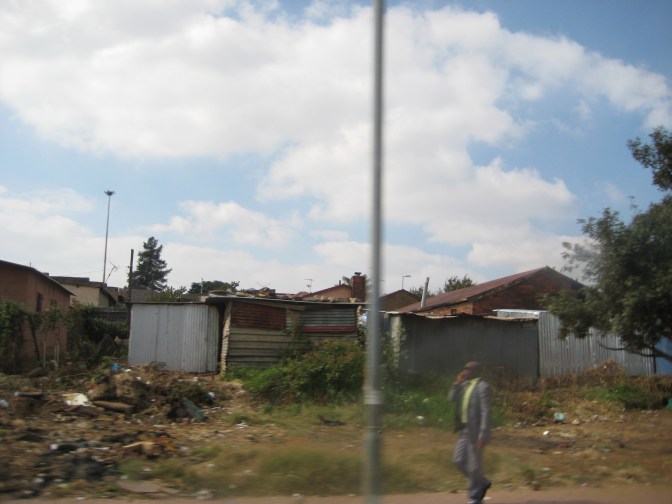
Figure 1 – Soweto Life
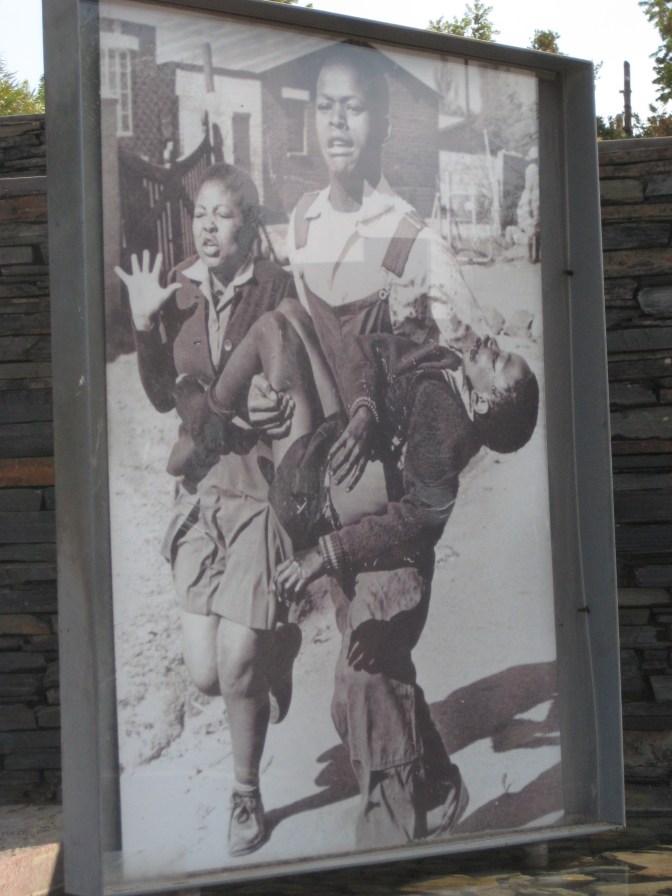
Figure 2 – Soweto Death – Hector Pieterson, 6/16/1976
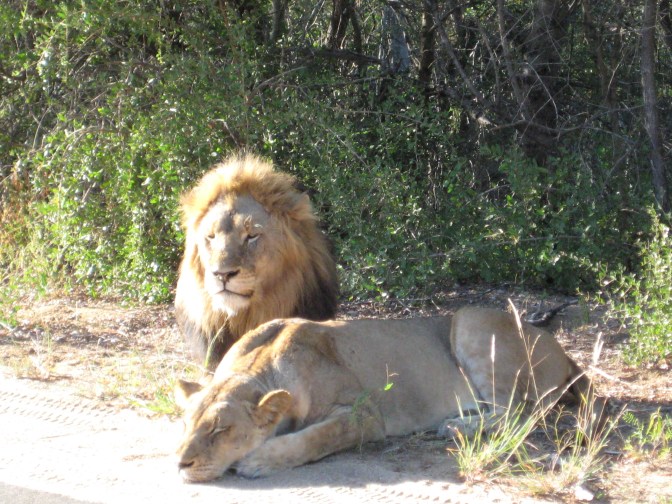
Figure 3 – Lions at Rest
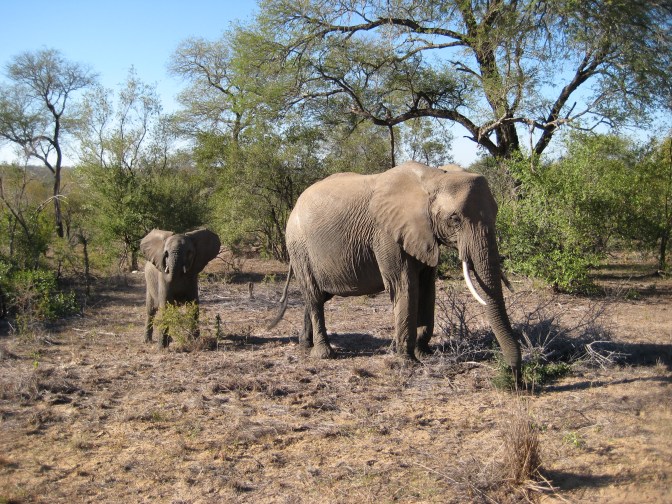 Figure 4 – Elephants
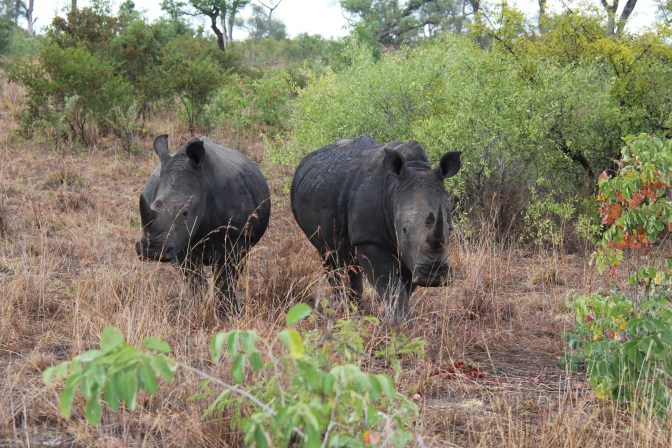
Figure 5 – White Rhinos (wide mouths)
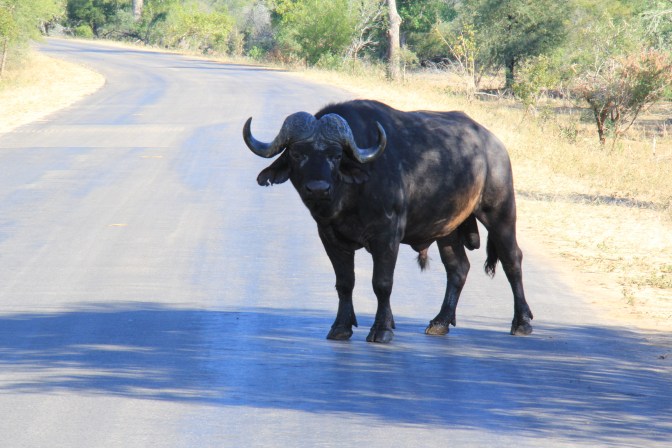 Figure 6 – Beautiful Cape Buffalo
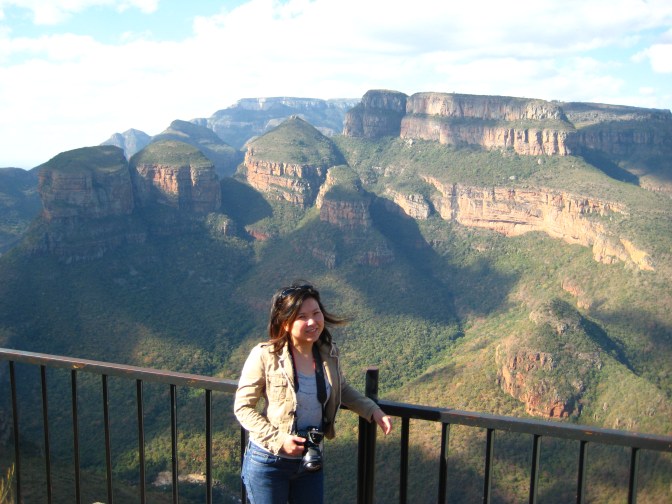
Figure 7 – Sai at Blyde (Three Rondavels)
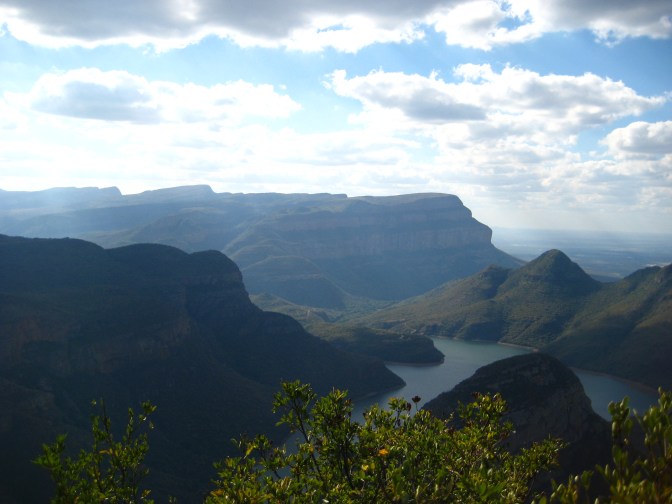
Figure 8 – Blyde River Canyon
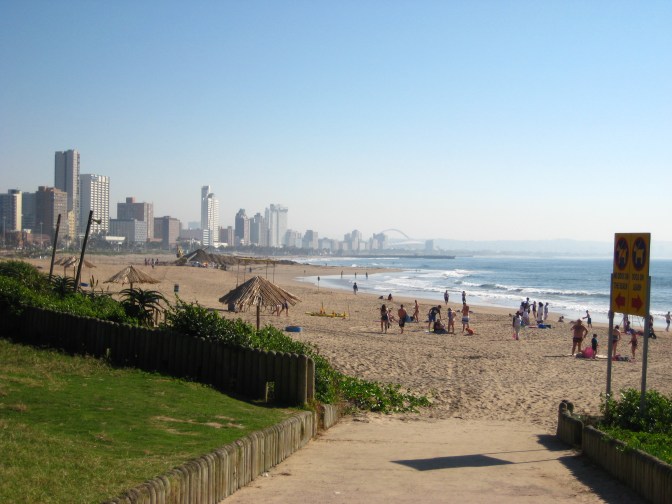
Figure 9 – Durban Beach
Figure 10 – Valley of 1,000 Hills
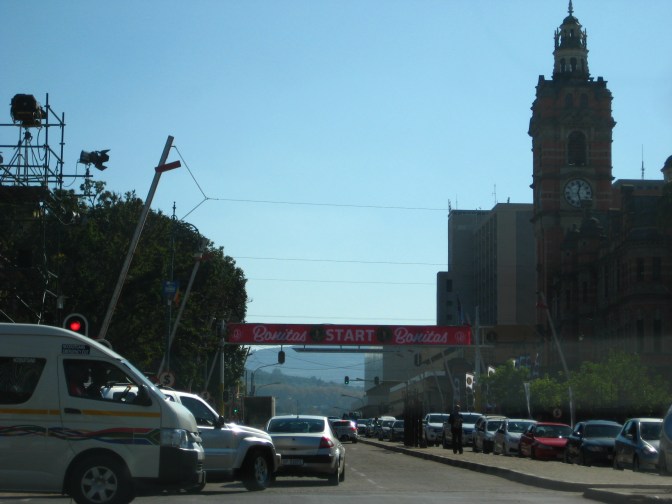
Figure 11 – Pietermaritzburg City Hall (day before)
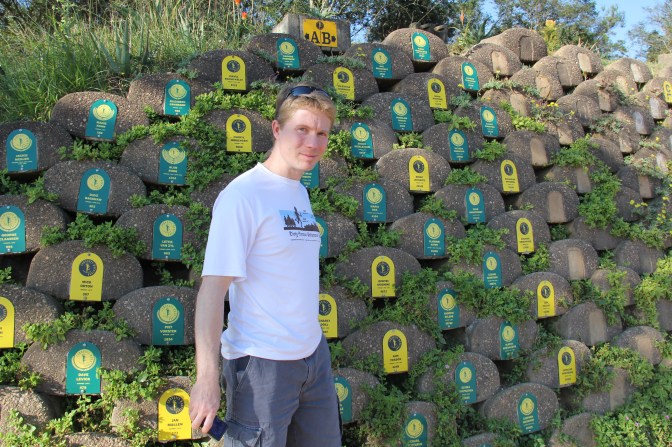
Figure 12 – Comrades Wall of Honour
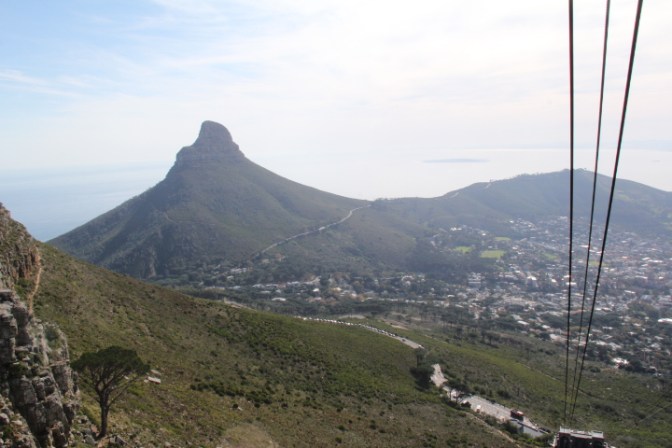
Figure 13- Cape Town from Table Mt. Cable Car
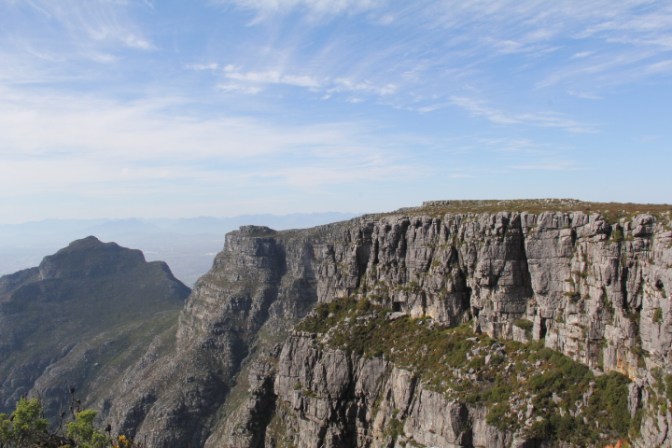
Figure 14 – Table Mountain
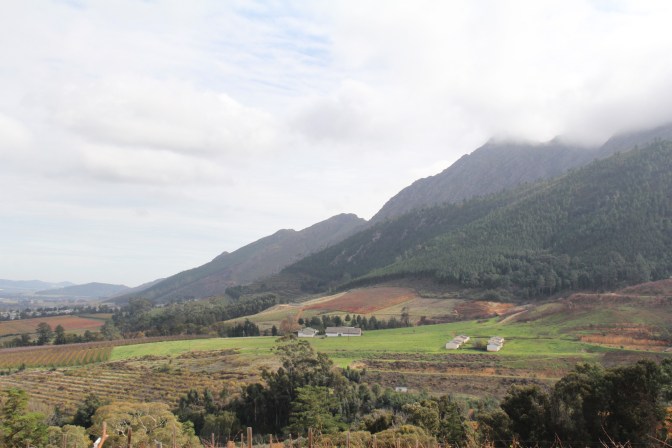
Figure 15 – Wine Country (Franschhoek)
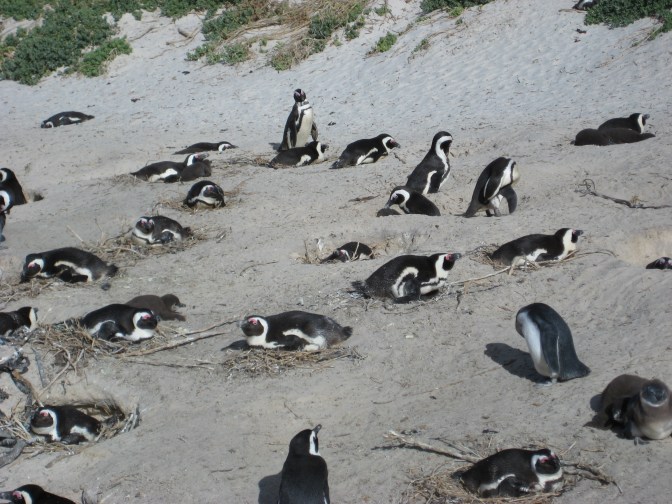
Figure 16 – African (Jackass) Penguins
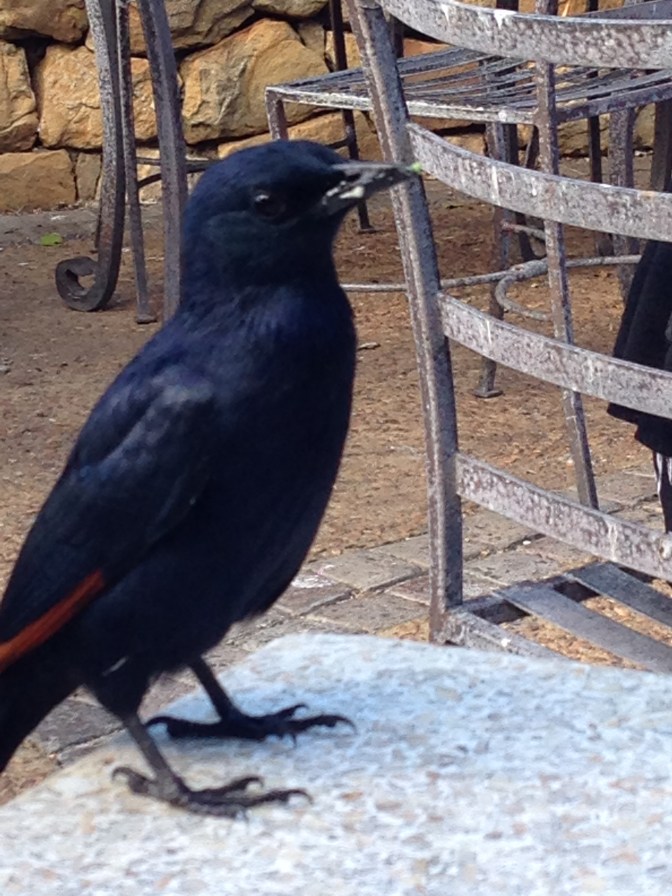
Figure 17 – Guac-Billed Thiever
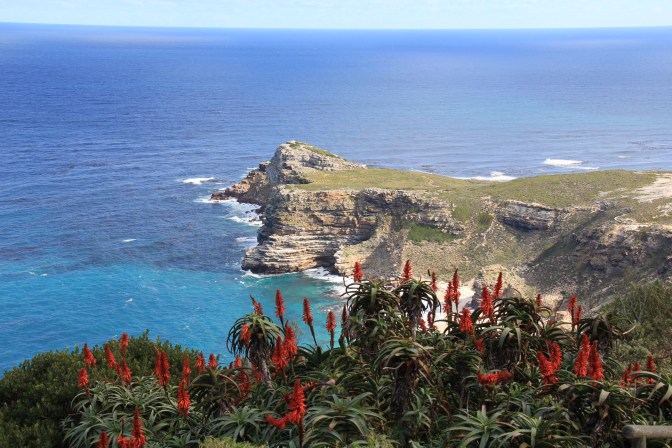
Figure 18 – Cape of Good Hope – The End
[1] I read John Cameron-Dow’s “Comrades Marathon: The Ultimate Human Race”. This chronicled every run from 1921 through 2010, so a lot of my Comrades facts use this source. Ibids abound. Thanks JCD (don’t confuse him with JCVD – Jean Claude Van Damme doesn’t know shit about Comrades).
[2] Did you know that Alberto Salazar is the only American man to win Comrades? He was victorious in 1994. Ann Trason (badass that she is) won the women’s race twice in 1996 and 1997. That’s it for USA. And if you didn’t know this, now you learned something!
[3] Just kidding. There’s no proof the Russians cheated during their reign of dominance at Comrades. Their victories were more likely the result of Commie pride, not Prednisone. Still, if I happen to die under mysterious circumstances, Vladimir Putin is my #1 suspect. Dude can’t take a joke (kind of like Trump). #2 suspect is the pharmaceutical cocktail party running through my veins for this trip. #3 suspect is my loving wife, though why, I cannot understand, since I am awesome and her favorite (first) husband and my life insurance is not a lot…
[4] So I am not sure if Arthur Newton was ever knighted, but Sir Isaac Newton was (no relation, that I know of). Isaac may have defined gravity, but Artie defied it on the hills between these two South African towns, so I’ll call him Sir too.
[5] JCD ibid, bitch.
[6] Not a good sign. First couple of pages, and I’ve already come out against Trump, teased the Tea Party, and taken an anti-hunting position; while my mother would be pleased, any red state readers will likely be pissed. I apologize for the politicizing, though I know it won’t end that quickly. Maybe I can visit the Cradle of Humankind (near Johannesburg) and I’ll look for Obama’s real birth certificate. Just kidding. We all know he’s from Kenya. I’ll also not pick on any elephants we see in Kruger for their association with the Republican Party.
[7] I don’t think this timeline for justice would comfort any of the Black Lives Matter protestors.
[8] If the dick, asshole and pussy speech from that movie didn’t move you, you must be dead inside.
[9] Watching videos of these Nationalist leaders and reading some of their justifications reminded me of some of the rationalizations of certain blowhards today. It was chilling (not cool) foreshadowing for what could happen in the US if people don’t chill the fuck out. SA copied USA in so many ways as outlined above; are we headed to re-segregation in order to make America great again, just like the idyllic 1950s? Sorry, white guilt and liberal media are poisoning my report!
[10] I may have made a few assumptions and/or simplifications at the end here; because we had a bus to catch I kind of rushed through and skipped a few of the later parts of the exhibit.
[11] I tried to track down the source for the skit, but there’s only so much searching allowed for Rosa Parks jokes before Karma Police or KKK recruiters take notice.
[12] I finally tried the treadmill on our last full day at this hotel. While I was overall very happy with the stay at this establishment, I will not be singing praises for its treadmill anytime soon. This was the worst running machine I’ve ever used (and I once ran on a haunted treadmill in Phuket). The belt slipped and skipped roughly every thirty seconds, sending me lurching, until I started holding onto the rails for balance. After less than a kilometer, the machine went dark, dead. So much for that test run. I hit the highway for a quick (short, not fast) 30 minute run, hoping to beat the dwindling rays of daylight and not become roadkill by park visitors fleeing Kruger well in excess of the posted speed limit. I survived (obviously) and even enjoyed it, at least the part when I passed an elephant and a kudu, both safely inside the fence of an adjacent private game reserve.
[13] One of the first things they tell you at the start of the safari is that you should always stay in your seat. Seated, you are part of the big, moving, gassy, four-wheeled, unappealing animal; when you stand, you stand out, particularly to a predator that might want to try some white meat.
[14] Striped bass, perhaps. Or maybe a seahorse I could almost see. But I’m pretty sure these were zebras.
[15] Fear not, Fodor’s loyalists. His record is better than my hearing.
[16] Why do blacks always get the aggressive reputation?
[17] This is not why I chew my fingernails.
[18] From Mr. Sabi Tour Guide Know It All.
[19] Just kidding Canada. You guys are great. Please welcome me with open arms after the next US election.
[20] Yes, by this stage, I should know my wife better, rather than being continually surprised. However, since she changes her mind so frequently, I’d argue (and have) that it’s not my fault.
[21] We actually suffered a flat inside of Kruger. A service station in the park jacked up the car, pulled the tire, re-inflated it, found the leak, patched it, and put it back on. Total cost – 61.25 Rand = $4. Good luck ever beating that price.
[22] I would have been happy seeing White Lion at this point. If Kaiser Chiefs and Iron Maiden are still big in SA, why not these cheeseballs?
[23] For proof of this stress, see my crazy mental exchange with three ugly animals from the previous day.
[24] Electrical muscle stimulation (E-Stim).
[25] Mainly JCD.
[26] Is this because South Africa loves double jeopardy? I’d ask Oscar P, but don’t want to get shot.
[27] Admittedly, I’ve only done the down Comrades, but Boston is a net downhill course, and the down direction seems more comparable anyway, so just bear with me.
[28] Thanks Wikipedia.
[29] Comrades Marathon Association, not to be confused with the Country Music Awards.
[30] Boston Athletic Association, not to be confused with sheep talk.
[31] Note that this race report is just one day in the two week tale of my and Sai’s trip to South Africa. The full trip report is available for those interested, but be warned, it’s a long-winded mix of interesting excursions and uninteresting spousal spats. It’s also really, really long.
[32] Regenerative Orthopedics & Sports Medicine did a great job of getting me back on my feet quickly. They even tried to fix my f$#ked up form, which they believe caused the injury, but I’m too stubborn to listen.
[33] Reading John Cameron-Dow’s complete history of the race was a lot of work (but interesting)!
[34] Scrolling through nearly 15,000 finishers took too long to figure out the split between bronze and Clapham medalists.
[35] A day later, as Sai and I were eating dinner in Cape Town, an a cappella group started singing African folk music before hawking their CDs. I asked if they played Shosholoza, he flipped CD #2 and pointed to song #5, and they had a sale.
[36] As far as I know, only South Africa calls non-traditional distances “marathons.” Everywhere else, marathon means 26.2 miles (or 42.2 km). In SA, it can mean 56 km (Two Oceans) or 87-90 km (Comrades), or other random distances. So if someone tells you they are getting ready to run a marathon, unless it’s in South Africa, don’t ask how long this one is.
[37] Somewhere around 83 km in, I received my final rubdown, to patch me back for the final run-in. I thanked the trainer profusely, told her that she was my savior and my new best friend. None of my friends have ever given me a rubdown like that! She was unimpressed and quickly onto the next set of legs as I set off for the finish.
[38] Comrades says that “it will humble you.” Trump is the least humble person imaginable. See where I’m going with this?
[39] From the Boston comparison, unfortunately there is nothing in Comrades that can hold a candle to the testosterone boost that is running past Wellesley College though. Unless you’re Jerry Sandusky.
[40] Sorry, that was a little forced, but I have a Pistorius quota to fill. Be glad I haven’t joked that blades would have made the run a lot easier. Also, what’s the etiquette on telling a spectator that she is looking good? If they can say it to us, surely it’s not harassment in return, right?
[41] Minor complaint, CMA. About a mile out from the finish, we ran under a highway overpass where the urine stench was overwhelming. That part stunk. Throughout the race, there were plenty of portapots available, though I often saw runners peeing on the side of the road with portapots within pissing distance. Is there some African fear of blue boxes? I also saw some runners peeing right next to distance markers. Not sure if this was a territorial pissing to assert ownership of this course?
[42] Final literal footnote – Balega socks kept me blister-free. I didn’t even lose any new toenails from the effort. The feet felt like they were bludgeoned with hammers from all the pounding (perhaps I should work on my bad running form after all), but it could have been much worse. I did see a couple of people carrying their shoes (or takkies) in the latter stages. That couldn’t have been fun.
[43] Sai did not make me write this part. She would never do such a thing.
[44] 1,000 Rand = $67 = $0.37 / minute. Damn cheap by American standards.
[45] Get your mind out of the gutter.
[46] I’m guilty of speculation here. “12 Years a Slave” is still sitting in my DVR, waiting for me to reach the right kind of somber mood to finally watch it. Meanwhile, I’ll re-watch Supertroopers every time it’s on. I know, I’m a bad person.
[47] Imagine, years from now, random visitors to the Gitmo horror show high-fiving over waterboarded dummies.
[48] Sai’s a lightweight, and I’m a cheapskate who can’t let the dregs go to waste. I’m not a wine drinker, so my writing may take a turn, not likely for the better, under its influence.
[49] Except for Subukwe, whom they didn’t even bother to charge. They just locked him up in isolation on the island for their own protection against his unacceptable ideas of human rights.
[50] Though the great Madiba did live to the age of 95!
[51] Since Soweto, I was bothered by one detail regarding the great Nelson Mandela, but I couldn’t figure out how to bring it up without sounding irreverent. Most of my writing is already irreverent (and irrelevant), but certain topics are taboo, such as Thailand’s King or… can’t think of anything else. With all due respect to the great Madiba, how could such a patient, forgiving, tolerant guy go through three marriages? He endured a lifetime of injustice with decades of imprisonment, and still found a way to work it out with South Africa. How come he couldn’t do the same with either of his first two wives? Total non-sequitur I’m sure, but learning that the modern saint had marital troubles was for me like learning that Jesus once sucker-punched a guy in a bar, or that Tom Brady was a big cheater. [I also learned after the trip that Chris Rock once talked about this same issue. Guess I’m not the only one to find it funny / sad.] And for the record, to my knowledge, JHC never punched a drunk.
[52] I feel like Vincent would have taken a bullet for me, if asked. Justin would have just steered me away from Oscar Pistorius. Okay, that’s the last one. I’m done with O.P. (Yeah, you know me).
[53] Thanks again, Fodor. I should just pepper the report with random “Fodor!” notes like the gentle giant to cover myself, but then I’d have to thank G.R.R.M. as well. Fodor, Fodor, Hodor!
[54] Haven’t figured out what I am an expert at yet.
[55] If you want to fraternize with some jackass penguin fans, go to Pittsburgh.
[56] Fear not, you’ve long since rounded the turn and are in the finishing stretch. Kick it in!
[57] Our silent flight from Buenos Aires to Miami in our first foreign excursion, eight years ago, set the bar pretty low for our subsequent travails travels.


